kw: taxes, analysis
Tax season is more than a month behind us, but the topic keeps coming up, I suppose because it is an issue in the Presidential campaign. I have had conversations with a few people which made me realize that there is deep misunderstanding of marginal income tax rates. In one case, a relative said he'd made a few extra hundred dollars last year, and it pushed him into the next bracket, lamenting, "The extra tax is going to cost me more than I made!" I was astonished. It took quite some time to explain the way income tax really works. He had thought that all his income would be taxed at the new rate.
This Tax Rate Schedule is right out of the Form 1040 Instruction booklet for the 2011 tax year. Let's explore what it means. My relative is intelligent and has a great job. His taxable income had been just below the threshold between 25% and 28%, but now, making about 84,000, he was in the 28% bracket.
He was thinking like this: 25% of $83,500 is $20,875. 28% of $84,000 is $23,520. The difference is $2,645. He thought by making $500 he'd be paying an extra $2,645. I showed him the real calculation:
$83,500 - $34,500 = $49,000 (see the third line of the chart)
$4,750 + 0.25x$49,000 = $4,750 + $12,250 = $17,000
That is what he would pay without the extra income.
$84,000 - $83,600 = $400 (see the fourth line)
$17,025 + 0.28x$400 = $17,025 + $112 = $17,137
That is his tax with the extra income. The difference is $137, not $2,645.
Then I asked him if he took the standard deduction and personal exemption. Fortunately, he knew about that. Did he pay much more than $17,000 in taxes last year? If so, he needed to file an amended return for 2010!
His actual income, assuming no extra adjustments or credits, had been $9,500 higher, because the standard deduction for a single person is $5,800 and the personal exemption is $3,700 (He didn't contribute to an IRA. Tsk!). So, rather than paying 25% or 28% on all his income, he'd be paying $17,137 with a gross income of about $93,500, which comes to 18.2%.
This is another important point. The Sage of Omaha, Mr. Buffet, said something about his secretary paying a higher tax rate than he did. His main source of income is capital gains, which is a flat 15% for long-term gains (short term gains are taxed at a higher rate – day traders take note). If he has a few extra millions of "ordinary income", they are (mostly) taxed at the 35% marginal rate. So his total tax rate was almost certainly a bit more than 15% of gross income, and perhaps several points more.
What does a secretary earn in Omaha? For a major corporation, it can be $35,000. With that amount of pay, few folks put anything into an IRA, so we can figure it this way:
$9,500 is not taxed (personal exemption and standard deduction)
$35,000 - $9,500 = $25,500
$25,500 - $8,500 = $17,000 (see line 2 of the chart)
$850 + 0.15x$17,000 = $850 + $2,550 = $3,400
The actual percentage of gross income is 9.7%. Take a look at this chart:
This is the result of similar calculations across the first four lines of the tax table. You need a gross income in the $75,000 range to pay a total tax rate over 15%. If Mr. Buffet's secretary is paying taxes in this range, she is well paid indeed! Most folks would be delighted to earn some $75,000 and pay around $11,000 in taxes, having $64,000 in disposable income. And just to be in the 15% marginal tax bracket, the secretary must earn at least $44,000, which is very high-end for that job.
The median income, per person, for 2007 was about $31,000. The actual gross tax rate at that level is well below 10%. Anyone who can itemize deductions, such as a homeowner or someone who gives a few thousand to a church or charity, will pay less…but such considerations are for another day.
Friday, May 11, 2012
Thursday, May 10, 2012
Thanks for what, I'd like to know
kw: book reviews, nonfiction, collections, humor, satire
I seldom watch NBC outside Olympics season, so I've never seen Late Night with Jimmy Fallon. He apparently has one night per week to read thank you notes sent him by others, and thank you notes he (and his writers) have written, in a more facetious vein. A few years of doing that, and you build up quite a collection. The logical next step is to sort them into book form.
This image shows one page of Fallon's book Thank You Notes. He and his writers share the credit. There are about 160 of these, and unless you spend a lot of time with the pictures, it takes less than an hour to read through. I managed to laugh about twice. The notes are often cute, but that's about it.
I seldom watch NBC outside Olympics season, so I've never seen Late Night with Jimmy Fallon. He apparently has one night per week to read thank you notes sent him by others, and thank you notes he (and his writers) have written, in a more facetious vein. A few years of doing that, and you build up quite a collection. The logical next step is to sort them into book form.
This image shows one page of Fallon's book Thank You Notes. He and his writers share the credit. There are about 160 of these, and unless you spend a lot of time with the pictures, it takes less than an hour to read through. I managed to laugh about twice. The notes are often cute, but that's about it.
Wednesday, May 09, 2012
The rest of the 2012 O Henry Award stories
kw: collections, continued review, short stories, story reviews
The last four stories in The Pen/O. Henry Prize Stories for 2012 are a motley mix, though three lean hard on imaginary landscapes.
- Rothko Eggs by Keith Ridgway – A girl apparently falling in love, though either the girl is weird, or everyone around her is. Rothko is an artist she is not sure she likes, but when she takes her boyfriend to a Rothko exhibit, he is moved to an extent that alarms her.
- The Deep by Anthony Doerr – A young man with a serious heart defect, in the 1920s, learns to cope with life in spite of it. He is drawn to ocean creatures, perhaps because of the uncertain ocean within.
- The Woman Who Lived in the House by Salvatore Scibona – A divorced man, also newly broke (the cause, not the result of the divorce) returns to the farm, where he must cope with a cannibalistic dog, even as his mind eats itself from within.
- Corrie by Alice Munro – A story of an affair, this one long-term. Blackmail is involved, but what do you do when you've outlived your blackmailer? It has an unusual twist on the typical story of infidelity.
Tuesday, May 08, 2012
More from 2012 O Henry Awards
kw: continued review, short stories, story reviews, collections
Herewith, notes on five more of the stories in The PEN/O. Henry Prize Stories for 2012.
- Kindness by Yiyun Li – As long as any three of the others in the volume. A retrospective by a self-contained, middle-aged Chinese woman of her army years, and of those who thought they were being kind, and a few who were genuinely kind to her.
- Phantoms by Steven Millhauser – An odd treatment of seeing imaginary folk.
- Boys Town by Jim Shepard – Ought to be subtitled "The making of a psychopath". Inside the mind of someone different from most of us, the kind that people always say later, "He was so quiet." The title refers to an old movie with Spencer Tracy and Mickey Rooney.
- The Hare's Mask by Mark Slouka – A boy learning what his father went through growing up, resulting in a phobia about rabbits.
- Eyewall by Lauren Groff – A hurricane story, but most of it takes place in the imagination of the protagonist, who has chosen to ride out the storm.
Monday, May 07, 2012
This year's O Henry stories
kw: book reviews, story reviews, short stories, collections
In recent years the name of the organization has changed, but the mission is the same. The title spells it out: The PEN/O. Henry Prize Stories: Best Stories of the Year 2012. This year's volume was edited by Laura Furman and the selections were made by Mary Gaitskill, Daniyal Mueenuddin and Ron Rash. I'll review them story by story over the next few days, and try not to give too much away.
- Uncle Rock by Dagoberto Gilb – She's a very pretty single mom, and her son is learning to grow up amid a constant flow of suitors. She just might marry the one the son calls Rock.
- The Vandercook by Alice Mattison – After taking over a family printing business, a couple adjusts. The man begins to learn just how frightening it is to live with someone who cannot admit fault. A "Vandercook" is an antique letterpress.
- Leak by Sam Ruddick – Less of a story than a vignette, covering a couple of hours during which time is primarily wasted. The only character of slight interest is George.
- Nothing Living Lives Alone by Wendell Berry – Berry is the classic characterizationist. Here an elderly man muses over past events and what he learned from them. The story stands well alone, but feels like part of a longer work.
- The First Wife by Christine Sneed – As the lead character remarks, most stories give space and weight to the lead-up to a marriage, and only a line or two to its aftermath, happy or not. This story seeks to redress this imbalance.
- A Birth in the Woods by Kevin Wilson – It is hard to comment without totally spoiling this story of a very young boy learning much too much, much too fast.
- Naima by Hisham Matar – A youngster losing his mother struggles to learn what nobody will tell him. Set in Cairo.
- Mickey Mouse by Karl Taro Greenfeld – A peek inside wartime Japan, and an illustrator commissioned, or so he thinks, to create a Japanese competitor for the iconic Mouse.
- Things Said or Done by Ann Packer – The title is from Yeats. The story pivots on the quotation. A wedding day on which the "happy couple" may be the only happy people present.
- East of the West by Miroslav Penkov – The West is Yugoslavia, during Tito's lifetime; the East is Bulgaria at its most repressive. A young man strives to achieve freedom, but can the habits learned by the unfree be replaced by new habits?
- A Brush by John Berger – A touching story of gifts exchanged. It took time to get accustomed to very evocative language.
Saturday, May 05, 2012
Of 2012 and bugs
kw: archaeology, pests, photographs
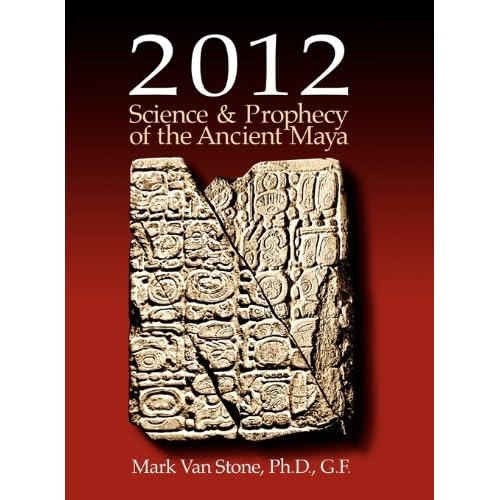
I am host this weekend to an itinerant archaeologist, who is attending a conference that kicks off the University of Pennsylvania's new exhibit, Lords of Time, about the Maya and the 2012 prophecies. He is the author of a book debunking the notion that the world will end in December this year.
Meanwhile, I have an apocalypse of my own to avert. I have been battling privet rust mites for a few years. I have about 300 feet of privet hedge. For three years I have sprayed in late May, and sometimes also in June, with horticultural oil. That is apparently too late.
This morning I took leaves from several places on the hedge and resorted to my trusty microscope. Here is one image of the result (magnification, about 50x in this image, more than 100x in the image you'll see if you click). Basically, the entire hedge is infested again, probably because I didn't treat it all, from end to end, in the past, only where the leaf curling and silvering were visible. This leaf and the others I looked at show no symptoms, yet!
I have a couple of jars of oil so I know what I'll be doing this morning, right after I get the archaeologist to his train.
I am host this weekend to an itinerant archaeologist, who is attending a conference that kicks off the University of Pennsylvania's new exhibit, Lords of Time, about the Maya and the 2012 prophecies. He is the author of a book debunking the notion that the world will end in December this year.
Meanwhile, I have an apocalypse of my own to avert. I have been battling privet rust mites for a few years. I have about 300 feet of privet hedge. For three years I have sprayed in late May, and sometimes also in June, with horticultural oil. That is apparently too late.
This morning I took leaves from several places on the hedge and resorted to my trusty microscope. Here is one image of the result (magnification, about 50x in this image, more than 100x in the image you'll see if you click). Basically, the entire hedge is infested again, probably because I didn't treat it all, from end to end, in the past, only where the leaf curling and silvering were visible. This leaf and the others I looked at show no symptoms, yet!
I have a couple of jars of oil so I know what I'll be doing this morning, right after I get the archaeologist to his train.
Thursday, May 03, 2012
Down the garden path and right off the cliff
kw: book reviews, nonfiction, satire
In 1962 the country got a good laugh from Vaughn Meader's record album The First Family, which poked fun at President John Kennedy and his family. It was great fun, and introduced a new generation to political satire, which had been rather thin on the ground since the early 1900s.
I was expecting something similar, with perhaps a broader spectrum, from American Freak Show: The Completely Fabricated Stories of our New National Treasures, by Willie Geist. I had not reckoned with the X generation and its propensity to be eXtreme in everything. Start with the notion of a caricature. It may be gentle or biting, subtle or broad, but well done caricature leaves its target recognizable.
This is not so with this book. It takes the notion of satire right to the edge of humanness, and quite a bit beyond. It also goes well beyond the bounds of decency. None of it was funny enough to justify the profane and vulgar content. Saturday Night Live is positively Victorian by contrast. I'm sorry I read it, and that's the last I'm going to say.
In 1962 the country got a good laugh from Vaughn Meader's record album The First Family, which poked fun at President John Kennedy and his family. It was great fun, and introduced a new generation to political satire, which had been rather thin on the ground since the early 1900s.
I was expecting something similar, with perhaps a broader spectrum, from American Freak Show: The Completely Fabricated Stories of our New National Treasures, by Willie Geist. I had not reckoned with the X generation and its propensity to be eXtreme in everything. Start with the notion of a caricature. It may be gentle or biting, subtle or broad, but well done caricature leaves its target recognizable.
This is not so with this book. It takes the notion of satire right to the edge of humanness, and quite a bit beyond. It also goes well beyond the bounds of decency. None of it was funny enough to justify the profane and vulgar content. Saturday Night Live is positively Victorian by contrast. I'm sorry I read it, and that's the last I'm going to say.
Wednesday, May 02, 2012
Everybody loves Outlook
kw: email
I learned long ago that vulnerabilities in MS Outlook make it a prime target of virus writers and worm writers. So I have avoided using it for many years. At my work place, we've used Lotus Notes for more than ten years, and over time I got used to it. At home, I use the ISP's webmail tool, which has served me well enough. I used to use Eudora before I got broadband internet access. I also have a couple of specialty Email accounts on GMail.
Now the company management has decided to become an all-Microsoft shop, meaning we are learning SharePoint and Outlook, which are taking the place of the various parts of Lotus Notes. We are joining about 240 million people, just in the U.S., who primarily use Outlook for their Email. Fortunately, the learning curve for Outlook 2010 isn't too steep, at least not from the perspective of us peons.
From the perspective of corporate IT, it has been a long process. A major matter was migrating everyone's Lotus Notes stuff to Outlook. It took months to get a software tool working as well as it needed to. My migration occurred this morning. They ran the software against my LN files overnight (mine and a number of other folks. They are doing it in phases).
I got my new Outlook account set up this morning, and found almost everything there. Just not my Contacts. The address book synchronization that worked for most folks had not worked in my case. I used the Export software in LN to prepare a VCard file. But Outlook only receives the first card in a VCard file. I found I could right click on a LN contact record and have it Emailed as a VCard attachment. I only needed to move about a dozen contacts over, so sending myself a dozen Emails was the quickest way to do it. A colleague wrote a little Perl script that makes a multi-card file into any number of one-card files, so other folks who have my problem will use that.
Interesting to say, I am now up and running on Outlook, a bit quicker than I expected. Its similarity to other Office 2010 applications helped. I am still leery of its vulnerability to virus attack, but I guess the multilayer firewall at the company will help. Now to read the eight page tips sheet they sent us about using Outlook…
I learned long ago that vulnerabilities in MS Outlook make it a prime target of virus writers and worm writers. So I have avoided using it for many years. At my work place, we've used Lotus Notes for more than ten years, and over time I got used to it. At home, I use the ISP's webmail tool, which has served me well enough. I used to use Eudora before I got broadband internet access. I also have a couple of specialty Email accounts on GMail.
Now the company management has decided to become an all-Microsoft shop, meaning we are learning SharePoint and Outlook, which are taking the place of the various parts of Lotus Notes. We are joining about 240 million people, just in the U.S., who primarily use Outlook for their Email. Fortunately, the learning curve for Outlook 2010 isn't too steep, at least not from the perspective of us peons.
From the perspective of corporate IT, it has been a long process. A major matter was migrating everyone's Lotus Notes stuff to Outlook. It took months to get a software tool working as well as it needed to. My migration occurred this morning. They ran the software against my LN files overnight (mine and a number of other folks. They are doing it in phases).
I got my new Outlook account set up this morning, and found almost everything there. Just not my Contacts. The address book synchronization that worked for most folks had not worked in my case. I used the Export software in LN to prepare a VCard file. But Outlook only receives the first card in a VCard file. I found I could right click on a LN contact record and have it Emailed as a VCard attachment. I only needed to move about a dozen contacts over, so sending myself a dozen Emails was the quickest way to do it. A colleague wrote a little Perl script that makes a multi-card file into any number of one-card files, so other folks who have my problem will use that.
Interesting to say, I am now up and running on Outlook, a bit quicker than I expected. Its similarity to other Office 2010 applications helped. I am still leery of its vulnerability to virus attack, but I guess the multilayer firewall at the company will help. Now to read the eight page tips sheet they sent us about using Outlook…
Tuesday, May 01, 2012
Did it really ever start?
kw: book reviews, nonfiction, cosmology, time perspective, material engagement
Someone (several someones) said that "people generally get the leaders they deserve." That goes for universes. The Universe in which we live reflects the culture that gave rise to the concepts that are used to describe it. When did Cro-Magnon people, or perhaps Australopithecenes before them, first spin myths about the lights in the sky at night, and moon and sun? Things had come a long way by the time of Albert Einstein's gedankenexperimenten with railway carriages and elevators. Now, with our supercollider experiments and pocket telephones that idle along with cycle times measured in picoseconds, a few professional worriers are worrying out what might have happened during the first billionth of a billionth of a yoctosecond (that's 10-42 or 10-43 seconds, folks).
The time scales pertinent to a farmer are days and quarter-days, months and seasons in the yearly round. The Sun is the only clock needed. For the first few centuries after the invention of mechanical clocks, they had an hour hand only. The word "minute", pronounced my-nyoot', just meant really small; a "second" was the guy who backed you up in a duel. At some time these words, with fresh new pronunciations, became the go-to words for "1/60 hour" and "1/3600 hour". Now look what we have:
Each of the successive words in this graphic means 1/1000 of the one to its left. This Google Ngram shows the percent of books using the words indicated. Clearly, a century ago people got along just fine without dividing time up smaller than a second. Then Hertz and Marconi came along, and radio frequencies necessitated new words to describe their cycle times. The millisecond and microsecond came into their own with the invention of ENIAC. Note the sudden surge in "nanosecond" beginning about 1955. Early particle accelerators began making mesons and other "resonances" that only stayed around for a billionth of a second or less, and about every decade since there has been the need to write a lot about the next level of "tiny time". We're just getting going with attoseconds. In one attosecond (1 as = 10-18s), light moves about three Ã…ngstrom units, or 0.3 nm, the length of a water molecule. Attosecond computer cycles are unlikely to be achieved. The present record for overclocking a CPU chip is 8.429 GHz, which is a cycle time of 118.6 ps, or 118,600,000 as. The computer I am using right now hums along at a comfortable 3.05 GHz, a cycle time of 328 ps.
It does remind me of something said by Data in a Star Trek: Next Generation episode. Asked if he had considered betraying Captain Picard, he said, "Yes, for 1.78 seconds." Picard smiles with relief, until Data says, "Of course, to an android, that is an eternity." Well, Data may think on a picosecond or even femtosecond time scale, but our human brains still run on cycle times of 50 milliseconds or longer.
So there is one thing the Greeks got right when they mythologized about their cosmology: The oldest and most powerful god was named Chronos, or "time". How we think about time has changed over the past tenth-of-a-million years. Time itself? Not so much. But that may be about to change. In his new book About Time: Cosmology and Culture in the Twilight of the Big Bang, Adam Frank takes us on a journey through human culture, right to the brink of the theories that just may do away with time. What will replace it? Zeus replaced Chronos; will power replace time? Let's remember that Zeus was famously anarchistic (and promiscuous).
A central thesis of the book is that time and space are as much constructs of our consciousness as they are its source. A key phrase is "material engagement," the continual back-and-forth of our growing cultural concepts as mediated by our involvement in the material world. Einstein thought about events that seemed simultaneous as seen by a ticket-seller in a train station, and how they would be perceived by the conductor aboard the train. Particularly if the train were moving at a speed approaching 300,000 km/s. He compared it to the "perception" of a light ray itself, racing between railway station and the carriage, to convey the news about an event the station master wished to time. This kind of thinking led to the special theory of relativity, which still requires a strong dose of "de-befuddling" by physics teachers, so students can think properly about phenomena that occur rapidly at "relativisitic" speeds.
But what is material engagement? I got this quote from the man who coined the term, Lambros Malafouris:
Thus, the book culminates in the work of four "rebel" scientists in three areas. First James Barbour would convince us that there is no time, there are just "NOWs"; that causality is an illusion (although I suspect S.J. Gould, were he still with us, would have something to say about "contingency" mediating what is possible). Secondly, Andreas Albrecht, an early proponent of inflation cosmology (which I heartily reject), finds that the choice of one's clock determines the model of the universe that we must adhere to. An example is given (which I confess I found hard to follow), that by choosing what you use to measure time, you can transform the equations describing an electron's motion to equations that pertain to photons. If that is true, it is truly world (or universe-) shaking. In my physics education (before I turned to geophysics), bosons were bosons and fermions were fermions; never would the twain meet, at least not mathematically! Finally, Lee Smolin and Roberto Unger "look across the landscape of modern cosmology with its extra dimensions and other universes, declare them fictions and set off to deliberately forge another path" (p315).
Is it any surprise that such anti-establishment views can arise now, where we are on the verge of technologies that might just abstract us from the world? Is The Matrix to become true after all? And can machine-mediated thinking drive our thought processes into Data-like android territory? If time becomes malleable, it is no surprise that new cosmology theories will arise to match. That is the lesson of material engagement. Cultural shifts change the way we think, often in radical ways ("How you gonna get 'em back on the farm, after they've seen L.A.?"). Our ability to probe cosmology brings about a new cosmology. Then we push that cosmology to its limit. In the process, culture shifts, and new thoughts about cosmology become possible.
A final question is asked: "How much of the cosmos do we have objective access to?" (p 330). It seems, just considering matter, that some 75% of it is invisible, not reacting to photons. So-called "dark matter" is needed in copious amounts to keep galaxies from dissipating or galaxy clusters from evaporating. Maybe one day we'll discover "rubindium" and its sister meta-elements as postulated in Star Trek. But then there's "dark energy", which seems to be driving an accelerated expansion of the visible universe. I have been looking hard, and have yet to see anyone explore the notion that a Type 1a supernova in an extra-low-metallicity system (i.e., a very early one) might have a different intrinsic luminosity than a Type 1a supernova in a system with Z in the solar range. Until that question is fully dealt with, the "evidence" for acceleration is not just shaky, it is practically nonexistent.
A simpler way to ask the question is, "What can we really see?" In practical terms, we can see what we are looking for, and it takes a long time to see what we are not looking for. I appreciate those four rebels very much. They are not just asking the right kinds of questions, they have the intellectual tools to work towards answers to their questions. Not all of them will be right, but I would not bet against them. One or the other is likely to do work that will one day put the Big Bang on the shelf, along with Ptolemy's epicycles.
Someone (several someones) said that "people generally get the leaders they deserve." That goes for universes. The Universe in which we live reflects the culture that gave rise to the concepts that are used to describe it. When did Cro-Magnon people, or perhaps Australopithecenes before them, first spin myths about the lights in the sky at night, and moon and sun? Things had come a long way by the time of Albert Einstein's gedankenexperimenten with railway carriages and elevators. Now, with our supercollider experiments and pocket telephones that idle along with cycle times measured in picoseconds, a few professional worriers are worrying out what might have happened during the first billionth of a billionth of a yoctosecond (that's 10-42 or 10-43 seconds, folks).
The time scales pertinent to a farmer are days and quarter-days, months and seasons in the yearly round. The Sun is the only clock needed. For the first few centuries after the invention of mechanical clocks, they had an hour hand only. The word "minute", pronounced my-nyoot', just meant really small; a "second" was the guy who backed you up in a duel. At some time these words, with fresh new pronunciations, became the go-to words for "1/60 hour" and "1/3600 hour". Now look what we have:
Each of the successive words in this graphic means 1/1000 of the one to its left. This Google Ngram shows the percent of books using the words indicated. Clearly, a century ago people got along just fine without dividing time up smaller than a second. Then Hertz and Marconi came along, and radio frequencies necessitated new words to describe their cycle times. The millisecond and microsecond came into their own with the invention of ENIAC. Note the sudden surge in "nanosecond" beginning about 1955. Early particle accelerators began making mesons and other "resonances" that only stayed around for a billionth of a second or less, and about every decade since there has been the need to write a lot about the next level of "tiny time". We're just getting going with attoseconds. In one attosecond (1 as = 10-18s), light moves about three Ã…ngstrom units, or 0.3 nm, the length of a water molecule. Attosecond computer cycles are unlikely to be achieved. The present record for overclocking a CPU chip is 8.429 GHz, which is a cycle time of 118.6 ps, or 118,600,000 as. The computer I am using right now hums along at a comfortable 3.05 GHz, a cycle time of 328 ps.
It does remind me of something said by Data in a Star Trek: Next Generation episode. Asked if he had considered betraying Captain Picard, he said, "Yes, for 1.78 seconds." Picard smiles with relief, until Data says, "Of course, to an android, that is an eternity." Well, Data may think on a picosecond or even femtosecond time scale, but our human brains still run on cycle times of 50 milliseconds or longer.
So there is one thing the Greeks got right when they mythologized about their cosmology: The oldest and most powerful god was named Chronos, or "time". How we think about time has changed over the past tenth-of-a-million years. Time itself? Not so much. But that may be about to change. In his new book About Time: Cosmology and Culture in the Twilight of the Big Bang, Adam Frank takes us on a journey through human culture, right to the brink of the theories that just may do away with time. What will replace it? Zeus replaced Chronos; will power replace time? Let's remember that Zeus was famously anarchistic (and promiscuous).
A central thesis of the book is that time and space are as much constructs of our consciousness as they are its source. A key phrase is "material engagement," the continual back-and-forth of our growing cultural concepts as mediated by our involvement in the material world. Einstein thought about events that seemed simultaneous as seen by a ticket-seller in a train station, and how they would be perceived by the conductor aboard the train. Particularly if the train were moving at a speed approaching 300,000 km/s. He compared it to the "perception" of a light ray itself, racing between railway station and the carriage, to convey the news about an event the station master wished to time. This kind of thinking led to the special theory of relativity, which still requires a strong dose of "de-befuddling" by physics teachers, so students can think properly about phenomena that occur rapidly at "relativisitic" speeds.
But what is material engagement? I got this quote from the man who coined the term, Lambros Malafouris:
"In the dynamic tension that characterises the processes of material engagement, sometimes it is the thing that becomes the extension of the person. At other times, however, it is the person that becomes the extension of the material agent. … Agency as an emergent property cannot be reduced to any of the human - nonhuman components of action."(p 34 in Material Agency: Towards a Non-Anthropocentric Approach; Carl Knappett and Lambros Malafouris, eds. 2008). That is about as clear as Dr. Malafouris gets; his prose is mostly impenetrable. The key phrase here is "dynamic tension". It simply means that the material things in the world in which we live mediate what we can think about. Culture and cosmology define one another. A strong message of Dr. Frank's book is that now we have a language to describe cosmology that is more complete than anything previous. Pushing it to its limits (worrying about that first quintillionth of a yoctosecond), we have come to the limits of our ability to think about time.
Thus, the book culminates in the work of four "rebel" scientists in three areas. First James Barbour would convince us that there is no time, there are just "NOWs"; that causality is an illusion (although I suspect S.J. Gould, were he still with us, would have something to say about "contingency" mediating what is possible). Secondly, Andreas Albrecht, an early proponent of inflation cosmology (which I heartily reject), finds that the choice of one's clock determines the model of the universe that we must adhere to. An example is given (which I confess I found hard to follow), that by choosing what you use to measure time, you can transform the equations describing an electron's motion to equations that pertain to photons. If that is true, it is truly world (or universe-) shaking. In my physics education (before I turned to geophysics), bosons were bosons and fermions were fermions; never would the twain meet, at least not mathematically! Finally, Lee Smolin and Roberto Unger "look across the landscape of modern cosmology with its extra dimensions and other universes, declare them fictions and set off to deliberately forge another path" (p315).
Is it any surprise that such anti-establishment views can arise now, where we are on the verge of technologies that might just abstract us from the world? Is The Matrix to become true after all? And can machine-mediated thinking drive our thought processes into Data-like android territory? If time becomes malleable, it is no surprise that new cosmology theories will arise to match. That is the lesson of material engagement. Cultural shifts change the way we think, often in radical ways ("How you gonna get 'em back on the farm, after they've seen L.A.?"). Our ability to probe cosmology brings about a new cosmology. Then we push that cosmology to its limit. In the process, culture shifts, and new thoughts about cosmology become possible.
A final question is asked: "How much of the cosmos do we have objective access to?" (p 330). It seems, just considering matter, that some 75% of it is invisible, not reacting to photons. So-called "dark matter" is needed in copious amounts to keep galaxies from dissipating or galaxy clusters from evaporating. Maybe one day we'll discover "rubindium" and its sister meta-elements as postulated in Star Trek. But then there's "dark energy", which seems to be driving an accelerated expansion of the visible universe. I have been looking hard, and have yet to see anyone explore the notion that a Type 1a supernova in an extra-low-metallicity system (i.e., a very early one) might have a different intrinsic luminosity than a Type 1a supernova in a system with Z in the solar range. Until that question is fully dealt with, the "evidence" for acceleration is not just shaky, it is practically nonexistent.
A simpler way to ask the question is, "What can we really see?" In practical terms, we can see what we are looking for, and it takes a long time to see what we are not looking for. I appreciate those four rebels very much. They are not just asking the right kinds of questions, they have the intellectual tools to work towards answers to their questions. Not all of them will be right, but I would not bet against them. One or the other is likely to do work that will one day put the Big Bang on the shelf, along with Ptolemy's epicycles.
Monday, April 30, 2012
Another step towards Big Brother
kw: politics, policy, internet, privacy, legislation
An act called CISPA (Cyber Intelligence Sharing and Protection Act) passed the U.S. House of Representatives yesterday, and now it goes to the Senate. Proponents say, "Oh, no, it won't impact the privacy of citizens," but we know that's a sham. It is interesting to them precisely because they know it erases most of our privacy protections. See this C|Net article for a good analysis.
I find that Republican congressmen voted in favor 206 to 28. I am ashamed of them. I am a registered Republican, but this sure isn't the party of Abraham Lincoln or Theodore Roosevelt any longer. I may have to become a Libertarian.
I remember the first Terabyte database, which cost about a million dollars to set up in the early 1980s. It was commissioned by the Mormons for genealogical record-keeping. My colleagues and I were joking that if a disk drive with "infinite" capacity were invented—we called it the God file—the government would order two of them. I recall saying, "Sears and GM would be next in line". Today anyone can buy a multi-terabyte disk for about $100. The Google Earth image base is a multi-petabyte (thousands of terabytes) product, and Google is only one of a number of both corporate and government entities to have file bases approaching an exabyte (a million terabytes) in size. The NSA is building a multi-exabyte data store. So just where are they going to get data to fill it? You guessed it: the Internet, and CISPA is an integral part of the process. It gives them the right to "ask" for data dumps without breaking any laws, because CISPA removes or supersedes most current legal protections. The President has stated he will veto it if the Senate passes it. That's one thing he could do that I would like a great deal!
An act called CISPA (Cyber Intelligence Sharing and Protection Act) passed the U.S. House of Representatives yesterday, and now it goes to the Senate. Proponents say, "Oh, no, it won't impact the privacy of citizens," but we know that's a sham. It is interesting to them precisely because they know it erases most of our privacy protections. See this C|Net article for a good analysis.
I find that Republican congressmen voted in favor 206 to 28. I am ashamed of them. I am a registered Republican, but this sure isn't the party of Abraham Lincoln or Theodore Roosevelt any longer. I may have to become a Libertarian.
I remember the first Terabyte database, which cost about a million dollars to set up in the early 1980s. It was commissioned by the Mormons for genealogical record-keeping. My colleagues and I were joking that if a disk drive with "infinite" capacity were invented—we called it the God file—the government would order two of them. I recall saying, "Sears and GM would be next in line". Today anyone can buy a multi-terabyte disk for about $100. The Google Earth image base is a multi-petabyte (thousands of terabytes) product, and Google is only one of a number of both corporate and government entities to have file bases approaching an exabyte (a million terabytes) in size. The NSA is building a multi-exabyte data store. So just where are they going to get data to fill it? You guessed it: the Internet, and CISPA is an integral part of the process. It gives them the right to "ask" for data dumps without breaking any laws, because CISPA removes or supersedes most current legal protections. The President has stated he will veto it if the Senate passes it. That's one thing he could do that I would like a great deal!
Sunday, April 29, 2012
Mount Cuba 2012
kw: photographs, wildflowers, wildlife
We spent a pleasant hour at the Mount Cuba Center in Hockessin, Delaware this afternoon. The Center is famous for preserving and studying the native vegetation of this region. Less well known than some of the DuPont family estates such as Longwood Gardens, it is the only one I know that has solely native plants on display (except in the Round Garden where there are tulips and delphiniums).
Today was special: because of the mild winter, the Trilliums are actually past their prime, the dogwoods as well, but the wild azaleas are just getting into full bloom (see below. I am still getting used to the new blogging software).
It was also special because they had two people from a wild bird rehabilitation center (I didn't catch its name) bring in some raptors (hawks and a falcon), and this vulture, to show us. Each of the birds shown is injured in some way and could not live in the wild. The vulture is 20 years old and was raised as a pet, so it is much too trusting around people.
A pleasant day, with perfect weather for a long walk in the woods and gardens.
We spent a pleasant hour at the Mount Cuba Center in Hockessin, Delaware this afternoon. The Center is famous for preserving and studying the native vegetation of this region. Less well known than some of the DuPont family estates such as Longwood Gardens, it is the only one I know that has solely native plants on display (except in the Round Garden where there are tulips and delphiniums).
Today was special: because of the mild winter, the Trilliums are actually past their prime, the dogwoods as well, but the wild azaleas are just getting into full bloom (see below. I am still getting used to the new blogging software).
![]() |
| Lavender Trilliums with Bluets |
It was also special because they had two people from a wild bird rehabilitation center (I didn't catch its name) bring in some raptors (hawks and a falcon), and this vulture, to show us. Each of the birds shown is injured in some way and could not live in the wild. The vulture is 20 years old and was raised as a pet, so it is much too trusting around people.
![]() |
| Closeup of wild Azalea |
Friday, April 27, 2012
A head covered with foam
kw: observations, products, analysis
I am sure you've seen the ads for shampoo, where someone squeezes out an ounce or two of shampoo and lathers up. You see lather flying everywhere. I use one of those advertised shampoos, and I use a drop about the size of a nickel. I began to wonder, just how much does it take to clean my hair?
For most of us, we're really trying to remove oils that our scalps produce, and the amount is really quite small, even for someone with "oily hair". The surfactants in shampoo bind to an amount of oil roughly equal to their own volume. I haven't found any record of some number of milligrams or micrograms of oil that is "normal", so we'll have to make a reasonable estimate.
I have found by observation that if I get my hair very clean, it is pretty flyaway (even if it is no more than two inches long). Within a few hours, it gets more manageable when I brush or comb it, from the first coating of oil. So I estimate that enough oil is produced in about two hours to form a monolayer on all the hair, and production probably continues at this rate all day. By day's end, the hair is not noticeably oily, because a dozen monolayers is still not much oil. Let's calculate how much.
When I had a full head of hair, I kept it about as long as I do now, some 5 cm (2 inches). My hair was brown (getting gray these days), so the number of hair strands was about 50,000. That comes to 250,000 cm or 2,500 m of hair (8,200 ft). Brown hair averages about 60 µm in diameter, so its circumference is about 190 µm, or 0.00019 m. Multiply by 2,500 to get 0.475 m². These are rough calculations, so we'll round it to half a square meter. Just by the way, only about half my scalp has hair now, but the bald portion gets oily, so oil production hasn't slackened off.
To get the volume of one monolayer, now we just need the thickness. Skin oils are hydrocarbon based, so they'll have a sausage shape, with a diameter in the range of half a nanometer, or about 5Ã… (5 angstroms). 0.5m²×0.5nm = 2.5E-10 cubic meters, or 0.00025 cc, or 0.25 cubic mm. Twelve such volumes amount to 3 cubic mm.
So, the amount of oil you need to remove, if you wish to remove it all, is about 3 cubic mm. That is a dot the size of a pin head. Can we really get away with using a similar amount of shampoo? Would it really work? I have yet to make the experiment. My nickel-sized dollop of shampoo is about half a cc, or 500 cubic mm. I'll try smaller and smaller amounts to see how much does an effective job. I suspect there is a lot more at work here than just oil removal.
I am sure you've seen the ads for shampoo, where someone squeezes out an ounce or two of shampoo and lathers up. You see lather flying everywhere. I use one of those advertised shampoos, and I use a drop about the size of a nickel. I began to wonder, just how much does it take to clean my hair?
For most of us, we're really trying to remove oils that our scalps produce, and the amount is really quite small, even for someone with "oily hair". The surfactants in shampoo bind to an amount of oil roughly equal to their own volume. I haven't found any record of some number of milligrams or micrograms of oil that is "normal", so we'll have to make a reasonable estimate.
I have found by observation that if I get my hair very clean, it is pretty flyaway (even if it is no more than two inches long). Within a few hours, it gets more manageable when I brush or comb it, from the first coating of oil. So I estimate that enough oil is produced in about two hours to form a monolayer on all the hair, and production probably continues at this rate all day. By day's end, the hair is not noticeably oily, because a dozen monolayers is still not much oil. Let's calculate how much.
When I had a full head of hair, I kept it about as long as I do now, some 5 cm (2 inches). My hair was brown (getting gray these days), so the number of hair strands was about 50,000. That comes to 250,000 cm or 2,500 m of hair (8,200 ft). Brown hair averages about 60 µm in diameter, so its circumference is about 190 µm, or 0.00019 m. Multiply by 2,500 to get 0.475 m². These are rough calculations, so we'll round it to half a square meter. Just by the way, only about half my scalp has hair now, but the bald portion gets oily, so oil production hasn't slackened off.
To get the volume of one monolayer, now we just need the thickness. Skin oils are hydrocarbon based, so they'll have a sausage shape, with a diameter in the range of half a nanometer, or about 5Ã… (5 angstroms). 0.5m²×0.5nm = 2.5E-10 cubic meters, or 0.00025 cc, or 0.25 cubic mm. Twelve such volumes amount to 3 cubic mm.
So, the amount of oil you need to remove, if you wish to remove it all, is about 3 cubic mm. That is a dot the size of a pin head. Can we really get away with using a similar amount of shampoo? Would it really work? I have yet to make the experiment. My nickel-sized dollop of shampoo is about half a cc, or 500 cubic mm. I'll try smaller and smaller amounts to see how much does an effective job. I suspect there is a lot more at work here than just oil removal.
Thursday, April 26, 2012
Staying connected
kw: computer security
I haven't had a reason to visit the FBI web site before, but a newspaper article gave me one. Some clever cybercriminals set up a web server warehouse in Eastern Europe and propagated a virus that caused computers to send internet page address requests to their data warehouse to be resolved. The page addresses returned had more ads or different ads than the "normal" page. The scam owners made a few millions from the ad agencies they favored in this way.
To take down this operation, which amounted to infections of at least half a million computers worldwide, the FBI contracted a company to set up a mirror site running the same server software, then arrested the Eastern Europeans and closed down the original site. This has been going on for months now, but the mirror site is about to be closed down, on July 9 (don't you love how judges pick dates?). From that date, an infected computer will be unable to access the internet at all, because it will be sending requests to a set of Domain Name Servers (DNS's) that no longer exist. One side aspect of the infection is that antivirus updates are blocked, so other malware has probably infected the computer.
The FBI's contracting company has a tool to detect an infection, and a procedure to remove the infection if it is found. There are a couple of web addresses being printed in newspaper articles. I decided to go through the FBI and see what they offered. First, I checked my computer to see if an antivirus update would work. It did, so I had some initial comfort that I was unlikely to be infected.
To do what I did, do the following:
I haven't had a reason to visit the FBI web site before, but a newspaper article gave me one. Some clever cybercriminals set up a web server warehouse in Eastern Europe and propagated a virus that caused computers to send internet page address requests to their data warehouse to be resolved. The page addresses returned had more ads or different ads than the "normal" page. The scam owners made a few millions from the ad agencies they favored in this way.
To take down this operation, which amounted to infections of at least half a million computers worldwide, the FBI contracted a company to set up a mirror site running the same server software, then arrested the Eastern Europeans and closed down the original site. This has been going on for months now, but the mirror site is about to be closed down, on July 9 (don't you love how judges pick dates?). From that date, an infected computer will be unable to access the internet at all, because it will be sending requests to a set of Domain Name Servers (DNS's) that no longer exist. One side aspect of the infection is that antivirus updates are blocked, so other malware has probably infected the computer.
The FBI's contracting company has a tool to detect an infection, and a procedure to remove the infection if it is found. There are a couple of web addresses being printed in newspaper articles. I decided to go through the FBI and see what they offered. First, I checked my computer to see if an antivirus update would work. It did, so I had some initial comfort that I was unlikely to be infected.
To do what I did, do the following:
- Enter the URL www.fbi.gov . I haven't provided a link here because it is safest if you type in the URL directly.
- At the upper right they have a search bar. Enter dcwg; you are looking for articles about the Domain Change Working Group, the contractor working with the FBI.
- From the list returned, the second or third link will be to a page "Check to see if your computer is using rogue DNS". Click on that.
- There is a set of links. Which one you use depends on where you are in the world, and your language. Click one of them.
- You will then see either a green box or a red box. The green box tells you your computer is OK. The red box informs you how to remove the infection it found. I haven't had to do so, so you are on your own from here.
Tuesday, April 24, 2012
The zipper is just the beginning
kw: observations, history
Today's Google Doodle marks the 132d birthday of the inventor of the zipper, Gideon Sundback. Prior to about a century ago, which is also prior to the use of elastic in waistbands, you had to undo a couple of buttons to get trousers off, which could be a problem if you were in too big a hurry!
But there is more to the day than sartorial developments. The Internet is a wonderful library, and when I get a wild hair about something, its resources astound me. In particular, there are dozens of "this day in history" sites. The best that I've so far found is historyorb.com. Some tidbits from its archive:
Today's Google Doodle marks the 132d birthday of the inventor of the zipper, Gideon Sundback. Prior to about a century ago, which is also prior to the use of elastic in waistbands, you had to undo a couple of buttons to get trousers off, which could be a problem if you were in too big a hurry!
But there is more to the day than sartorial developments. The Internet is a wonderful library, and when I get a wild hair about something, its resources astound me. In particular, there are dozens of "this day in history" sites. The best that I've so far found is historyorb.com. Some tidbits from its archive:
- 2005 – Cardinal Joseph Ratzinger becomes Pope Benedict XVI.
- 1996 – Highest scoring baseball game in 17 years: Twins 24, Tigers 11.
- 1990 – West and East Germany agree to merge their currency and economies (to take place on July 1).
- 1981 – Introduction of the IBM PC. Prior to this you had to build one from a kit.
- 1969 – Paul McCartney says there is no truth to rumors that he is dead (Mark Twain said it better 72 years earlier: "Rumors of my death are an exaggeration").
- 1953 – Queen Elizabeth II knights Winston Churchill (and about time, too).
- 1928 – A patent issued to Reginald Fessenden for the fathometer, a sonar device that measures depths underwater. This beats lowering a weight on a marked rope, which may or may not hang vertically.
- 1907 – Milton Hershey opens Hersheypark in Hershey, PA. Initially, it was exclusively for employees.
Monday, April 23, 2012
Are all viruses pathological?
kw: viruses, medicine
In a recent article in Wired (found here at wired.com), the question is raised, if we develop broad-spectrum antiviral medications, should we use them? Since the publication of that article just a month ago, about sixty online articles have explored the idea. You can find them and other similar articles by searching for "beneficial viruses" (include the quotes for a phrase search).
Are all viruses bad? Do they all cause disease?
When bacteria were first discovered, it was thought by many that all "germs" were bad, and once antibiotics began to be developed in the 1930s, they were used indiscriminately for any sign of infection. Such things as upset digestions, diarrhea and bloating were thought to be unfortunate side effects. But it didn't take long for our "internal flora" to be discovered, and we are still learning how important they are. The list of beneficial bacteria, some residing in our gut, some on our skin, some lining our sinuses, and others who knows where, continues to grow. By current estimates, 90% of the cells in a "human" body are bacterial, though they make up no more than 2% by weight.
It is no more than a decade or two since it was discovered that in a typical sample of ocean water, there are a thousand virus particles ("virions") for every eukaryotic cell, most of them being bacteriophages. Or, I should say, denizens of bacteria, because it is not known whether a virus residing in a bacterial cell is there to kill it or in some way to help it. We know that phages are pathological to bacteria, just as many viruses that infect us and our animals and plants are pathological. But we are just beginning to learn of viruses that are found in cells yet don't seem to cause disease.
Wouldn't it be ironical if we developed a broad-spectrum antiviral, tried it out, and found it to be universally fatal to the mouse, monkey or man into which it was introduced? Fatal why? Because it eliminated a virus to which we play host, that performs a required function! Fortunately, while our internal flora of bacteria may be helpful, none is required for us to continue living. Strains of supposedly germ-free mice have been developed, and though they live differently than ordinary mice—mainly in that they need to eat more—they seem to live well enough. But we don't even know if those mice are virus-free. We don't yet know how to produce a virus-free mouse, or if it is possible to do so.
The days of effective antibiotic medicines are drawing to a close. We are being forced to take another look at an older, effective, if cumbersome, therapy using bacteriophages. The problem is, these are very specific. There are no broad-spectrum phages. A second kind of therapy (this is very early days) is the anti-bacterial bacterium: using an overwhelming dose of our good bacterial companions to drive out those we don't want.
This makes me wonder, are there anti-viral viruses? Are we actually host to any (or many?) viruses, not yet discovered or studied, that keep pathological viruses in check most of the time? Just as certain bacterial are becoming known as essential ingredients in our immune function, there may also be immune-functional viruses.
This just scratches the surface of the questions we need to be asking about viruses and our relationship to them. There is a long way to go, and we ought to be careful how we use new "miracle" drugs, lest the miracle we perform is to our own detriment.
In a recent article in Wired (found here at wired.com), the question is raised, if we develop broad-spectrum antiviral medications, should we use them? Since the publication of that article just a month ago, about sixty online articles have explored the idea. You can find them and other similar articles by searching for "beneficial viruses" (include the quotes for a phrase search).
Are all viruses bad? Do they all cause disease?
When bacteria were first discovered, it was thought by many that all "germs" were bad, and once antibiotics began to be developed in the 1930s, they were used indiscriminately for any sign of infection. Such things as upset digestions, diarrhea and bloating were thought to be unfortunate side effects. But it didn't take long for our "internal flora" to be discovered, and we are still learning how important they are. The list of beneficial bacteria, some residing in our gut, some on our skin, some lining our sinuses, and others who knows where, continues to grow. By current estimates, 90% of the cells in a "human" body are bacterial, though they make up no more than 2% by weight.
It is no more than a decade or two since it was discovered that in a typical sample of ocean water, there are a thousand virus particles ("virions") for every eukaryotic cell, most of them being bacteriophages. Or, I should say, denizens of bacteria, because it is not known whether a virus residing in a bacterial cell is there to kill it or in some way to help it. We know that phages are pathological to bacteria, just as many viruses that infect us and our animals and plants are pathological. But we are just beginning to learn of viruses that are found in cells yet don't seem to cause disease.
Wouldn't it be ironical if we developed a broad-spectrum antiviral, tried it out, and found it to be universally fatal to the mouse, monkey or man into which it was introduced? Fatal why? Because it eliminated a virus to which we play host, that performs a required function! Fortunately, while our internal flora of bacteria may be helpful, none is required for us to continue living. Strains of supposedly germ-free mice have been developed, and though they live differently than ordinary mice—mainly in that they need to eat more—they seem to live well enough. But we don't even know if those mice are virus-free. We don't yet know how to produce a virus-free mouse, or if it is possible to do so.
The days of effective antibiotic medicines are drawing to a close. We are being forced to take another look at an older, effective, if cumbersome, therapy using bacteriophages. The problem is, these are very specific. There are no broad-spectrum phages. A second kind of therapy (this is very early days) is the anti-bacterial bacterium: using an overwhelming dose of our good bacterial companions to drive out those we don't want.
This makes me wonder, are there anti-viral viruses? Are we actually host to any (or many?) viruses, not yet discovered or studied, that keep pathological viruses in check most of the time? Just as certain bacterial are becoming known as essential ingredients in our immune function, there may also be immune-functional viruses.
This just scratches the surface of the questions we need to be asking about viruses and our relationship to them. There is a long way to go, and we ought to be careful how we use new "miracle" drugs, lest the miracle we perform is to our own detriment.
Sunday, April 22, 2012
A nine by any other name
kw: words, religion, meanings, origins
I have had nearly no contact with monasticism, so it is only recently that I learned to what extent Catholic piety is tied to the old Roman concept of time. In the daily discipline of many monastic orders, there is a round of eight sets of prayers. With their approximate time of day they are
In the monastic orders that keep the old way, one or more timekeepers have the job to ring signal bells when these standard hours occur, so the monks can all pray the office of each hour. This is immortalized in a children's song:
Are you sleeping, are you sleeping,
Brother John, Brother John?
Morning bells are ringing, morning bells are ringing:
Ding, ding, dong. Ding ding dong.
In French it is more revealing:
Frère Jacques, Frère Jacques,
Dormez vouz, dormez vouz?
Sonnez les matines, Sonnez les matines!
Din, dan, don. Din, dan, don.
In the third line, the sleeping brother, who is late with his signal, is exhorted to ring the bells! (or else!!) Poor Brother John. The ninth hour of the night, or three AM, it is tough to keep watch for the rising of a certain star that informs him it is time to ring the Vigil bells. Three other astronomical phenomena, sunrise, Noon, and sunset, are at least easier to anticipate.
I haven't learned how they determined, in any accurate way, the other times. An hour glass would only work for part of the year, because in early days, the lengths of the hours were variable, tied to the interval between sunrise and sunset, and for night watches, the opposite interval. Of course, computers can keep accurate track of any time scheme they like, for more modern monks!
Now I turn to the word that started all this investigation: None. This is not the pronoun "none", an Old English word that means "not one" and rhymes with "fun" or "done". Instead, this word rhymes with "phone" or "stone", and originates from Latin "nonus" meaning nine. Sometimes written "nones", it initially referred to the ninth day of some sequence, such as the ninth day of the month, or of a long celebration. Only in the Sixteenth century was it added to the Divine Office as a prayer-time at three PM or thereabouts.
I find it an amusing coincidence that the pronoun "none", meaning "not one", rhymes also with "nun". Thus in spelling "none" (the pronoun) matches "none" (prayer time at the ninth hour), while in pronunciation "none" (the pronoun) rhymes with "nun" (a woman with a religious vocation).
I have had nearly no contact with monasticism, so it is only recently that I learned to what extent Catholic piety is tied to the old Roman concept of time. In the daily discipline of many monastic orders, there is a round of eight sets of prayers. With their approximate time of day they are
- Vigil – pre-dawn
- Laud – sunrise
- Prime – early morning
- Terce – midmorning
- Sext – noon
- None – midafternoon
- Vesper – early evening
- Compline – sunset or late evening
In the monastic orders that keep the old way, one or more timekeepers have the job to ring signal bells when these standard hours occur, so the monks can all pray the office of each hour. This is immortalized in a children's song:
Are you sleeping, are you sleeping,
Brother John, Brother John?
Morning bells are ringing, morning bells are ringing:
Ding, ding, dong. Ding ding dong.
In French it is more revealing:
Frère Jacques, Frère Jacques,
Dormez vouz, dormez vouz?
Sonnez les matines, Sonnez les matines!
Din, dan, don. Din, dan, don.
In the third line, the sleeping brother, who is late with his signal, is exhorted to ring the bells! (or else!!) Poor Brother John. The ninth hour of the night, or three AM, it is tough to keep watch for the rising of a certain star that informs him it is time to ring the Vigil bells. Three other astronomical phenomena, sunrise, Noon, and sunset, are at least easier to anticipate.
I haven't learned how they determined, in any accurate way, the other times. An hour glass would only work for part of the year, because in early days, the lengths of the hours were variable, tied to the interval between sunrise and sunset, and for night watches, the opposite interval. Of course, computers can keep accurate track of any time scheme they like, for more modern monks!
Now I turn to the word that started all this investigation: None. This is not the pronoun "none", an Old English word that means "not one" and rhymes with "fun" or "done". Instead, this word rhymes with "phone" or "stone", and originates from Latin "nonus" meaning nine. Sometimes written "nones", it initially referred to the ninth day of some sequence, such as the ninth day of the month, or of a long celebration. Only in the Sixteenth century was it added to the Divine Office as a prayer-time at three PM or thereabouts.
I find it an amusing coincidence that the pronoun "none", meaning "not one", rhymes also with "nun". Thus in spelling "none" (the pronoun) matches "none" (prayer time at the ninth hour), while in pronunciation "none" (the pronoun) rhymes with "nun" (a woman with a religious vocation).
Saturday, April 21, 2012
Kepler keeps amazing
kw: astronomy, exoplanets, spacecraft
I suppose this article is the best place to go first to track the Kepler mission to find exoplanets. It is being kept up to date, and was last edited just a couple of weeks ago. Before the Kepler mission began, we knew of perhaps one or two planets that were Earth size (out of a few hundred), and one or two that might be in their star's habitable zone. So far the Kepler team has identified more than 2,300 probable planets, and about a tenth of them are similar in size to Earth. The number of planets found in their host star's habitable zone is nearly fifty, so far.
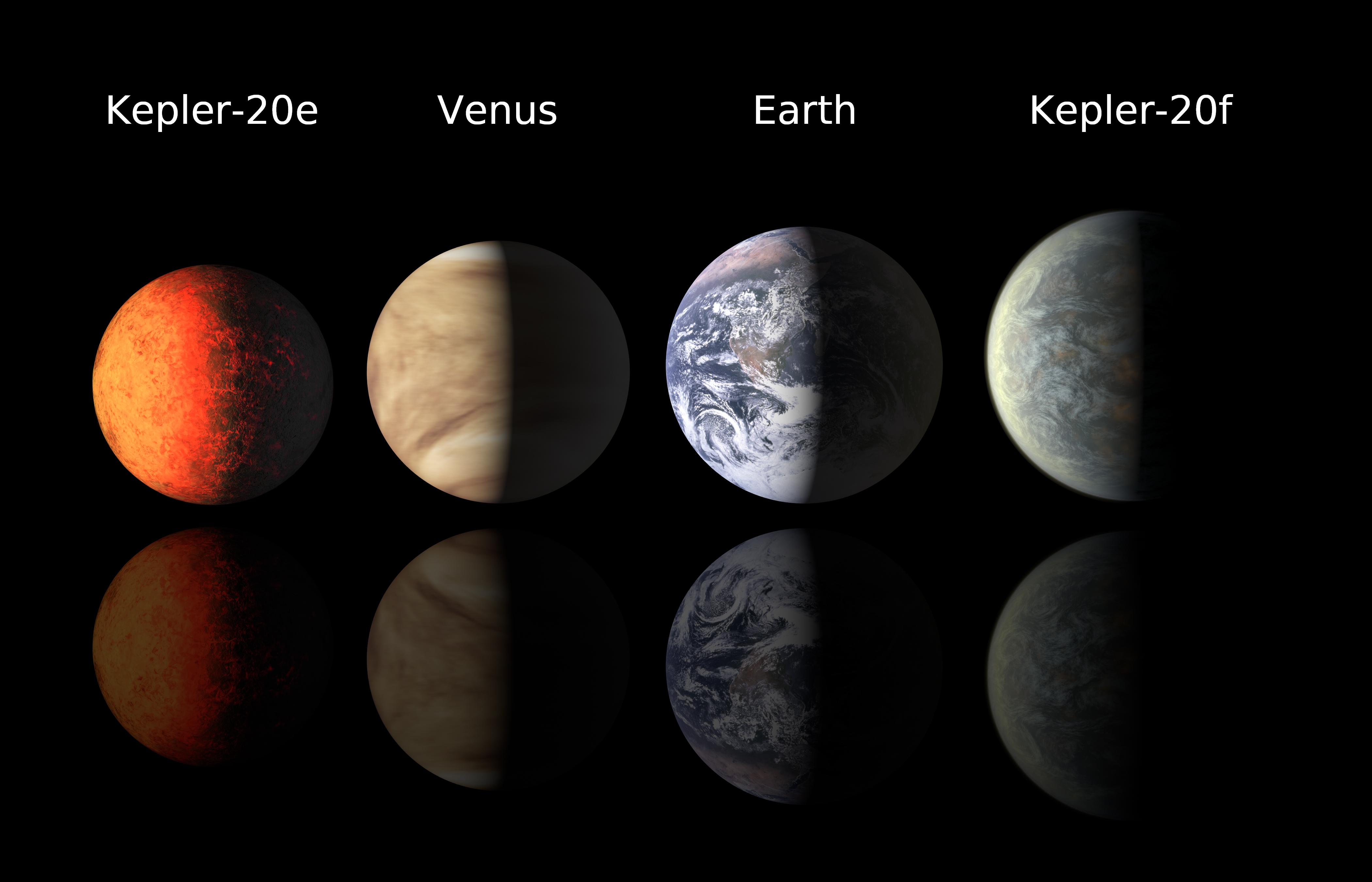
A most exciting recent discovery is two planets around a star dubbed Kepler-20, with sizes estimated as shown, both within the star's habitable zone. The smaller one may be hot like Venus. It will depend on the atmosphere. The larger one, a bit farther out, may be a little cooler than Earth, or very similar to Earth.
It is much too early to tell what kind of atmosphere they have. Whether either of them could have life depends entirely on that.
The Kepler mission is going on four years old already. It has revolutionized our understanding of planetary systems. Considering all that we have learned from observing just 1/400 of the sky, and only stars brighter than visual magnitude 16, there are many, many planets waiting to be found, and a great deal we can learn about planetary system evolution and composition.
The Kepler spacecraft observes more than 100,000 stars twice per hour, recording their brightness with great accuracy. The "light curve" for each star is examined, both by software and by volunteer "citizen scientists" (yours truly included), to find small dips in the stars' brightness that will herald the transit of a planet across the face of the star, as seen from Earth. Close-in planets that zip around their star in a few days will transit in a couple of hours. Transits of planets in orbits close to the size of Earth's orbit about the Sun will take half a day more or less. In the list of stars for which I have reported suspected planet transits, three have been listed as planet "candidates"; the team is very cautious. To get involved, set up an account at www.planethunters.org.
I suppose this article is the best place to go first to track the Kepler mission to find exoplanets. It is being kept up to date, and was last edited just a couple of weeks ago. Before the Kepler mission began, we knew of perhaps one or two planets that were Earth size (out of a few hundred), and one or two that might be in their star's habitable zone. So far the Kepler team has identified more than 2,300 probable planets, and about a tenth of them are similar in size to Earth. The number of planets found in their host star's habitable zone is nearly fifty, so far.
A most exciting recent discovery is two planets around a star dubbed Kepler-20, with sizes estimated as shown, both within the star's habitable zone. The smaller one may be hot like Venus. It will depend on the atmosphere. The larger one, a bit farther out, may be a little cooler than Earth, or very similar to Earth.
It is much too early to tell what kind of atmosphere they have. Whether either of them could have life depends entirely on that.
The Kepler mission is going on four years old already. It has revolutionized our understanding of planetary systems. Considering all that we have learned from observing just 1/400 of the sky, and only stars brighter than visual magnitude 16, there are many, many planets waiting to be found, and a great deal we can learn about planetary system evolution and composition.
The Kepler spacecraft observes more than 100,000 stars twice per hour, recording their brightness with great accuracy. The "light curve" for each star is examined, both by software and by volunteer "citizen scientists" (yours truly included), to find small dips in the stars' brightness that will herald the transit of a planet across the face of the star, as seen from Earth. Close-in planets that zip around their star in a few days will transit in a couple of hours. Transits of planets in orbits close to the size of Earth's orbit about the Sun will take half a day more or less. In the list of stars for which I have reported suspected planet transits, three have been listed as planet "candidates"; the team is very cautious. To get involved, set up an account at www.planethunters.org.
Friday, April 20, 2012
No off button
kw: book reviews, nonfiction, essays, e-mails, humor
This may not be the dumbest thing to go viral, but it must be the simplest. The little article titled "overdue" at 27b/6 is really what went viral: David Thorne wrote a humorous piece in the form of a stack of e-mails back and forth with a creditor: he tried to pay a bill by sending the picture of a spider. When they wouldn't accept it, he asked for it back, then added the missing 8th leg and sent it again. They wouldn't take it, so he asked them to send it back.
Thorne's book the internet is a playground: Irreverent Correspondences of an Evil Online Genius is a collection of articles and essays (loosely so called) and e-mail stacks from the web site. There are a few stock characters, such as Simon, who gets David involved in several humorous scrapes, such as camping trips to nowhere; Thomas, whose big head is the focus of the fun; and Shannon, who must be a receptionist or similar sort of clerk at the design agency Thorne claims to work for.
As the articles (etc.) make clear, the author's primary goal in life is to mess with as many minds as possible. He is unfailingly kind, in a knife-twisting sort of way that drives his correspondents (all of them imaginary, I suppose) right up the wall. I realized he is dallying with the boundary between reality and delusion, quite purposefully: His writing has the obsessive-and-just-won't-stop quality of a schizophrenic's word salad, but actually makes more sense.
It is not certain just where Thorne lives. The "About the Author" blurb inside the book states that he lives in Adelaide. The one on the back cover says he lives in Virginia. I wouldn't put it past him to live somewhere else entirely. It's in keeping with what-all else he has done.
This may not be the dumbest thing to go viral, but it must be the simplest. The little article titled "overdue" at 27b/6 is really what went viral: David Thorne wrote a humorous piece in the form of a stack of e-mails back and forth with a creditor: he tried to pay a bill by sending the picture of a spider. When they wouldn't accept it, he asked for it back, then added the missing 8th leg and sent it again. They wouldn't take it, so he asked them to send it back.
Thorne's book the internet is a playground: Irreverent Correspondences of an Evil Online Genius is a collection of articles and essays (loosely so called) and e-mail stacks from the web site. There are a few stock characters, such as Simon, who gets David involved in several humorous scrapes, such as camping trips to nowhere; Thomas, whose big head is the focus of the fun; and Shannon, who must be a receptionist or similar sort of clerk at the design agency Thorne claims to work for.
As the articles (etc.) make clear, the author's primary goal in life is to mess with as many minds as possible. He is unfailingly kind, in a knife-twisting sort of way that drives his correspondents (all of them imaginary, I suppose) right up the wall. I realized he is dallying with the boundary between reality and delusion, quite purposefully: His writing has the obsessive-and-just-won't-stop quality of a schizophrenic's word salad, but actually makes more sense.
It is not certain just where Thorne lives. The "About the Author" blurb inside the book states that he lives in Adelaide. The one on the back cover says he lives in Virginia. I wouldn't put it past him to live somewhere else entirely. It's in keeping with what-all else he has done.
Thursday, April 19, 2012
Dog 4 dinner
kw: food
There was a brief flurry the other day, about a quote from President Obama's book that he had once eaten dog, and a few other "delicacies". Let's not be too critical here. He was in Indonesia at the time, a region where you can buy dog meat at the corner market.
I once had a Cuban housemate. One day when it was his turn to cook, he made a delicious stew. When we were done, he let us know it was dog meat. He had bought it in Los Angeles, not far from where we lived.
We need to understand, there is hardly anybody out there kidnapping Fido for the larder. People raise certain breeds of dog for food. It just happens to be rare in the United States…rare but not unknown. I mean, there are several people I have known who raised rabbits for food. If you have a rabbit for a pet, I can understand a bit of squeamishness about eating its cousin. But meat is meat, as long as it isn't "long pig" (an old euphemism for human meat).
There was a brief flurry the other day, about a quote from President Obama's book that he had once eaten dog, and a few other "delicacies". Let's not be too critical here. He was in Indonesia at the time, a region where you can buy dog meat at the corner market.
I once had a Cuban housemate. One day when it was his turn to cook, he made a delicious stew. When we were done, he let us know it was dog meat. He had bought it in Los Angeles, not far from where we lived.
We need to understand, there is hardly anybody out there kidnapping Fido for the larder. People raise certain breeds of dog for food. It just happens to be rare in the United States…rare but not unknown. I mean, there are several people I have known who raised rabbits for food. If you have a rabbit for a pet, I can understand a bit of squeamishness about eating its cousin. But meat is meat, as long as it isn't "long pig" (an old euphemism for human meat).
Wednesday, April 18, 2012
Spending too much, as usual
kw: deficit spending
I have been hearing much, pro and con, about the Federal deficit and the danger in which it puts us. No doubt, we are mortgaging the future of our children, but that is nothing new. Take a look at this chart, in which the dollar deficits are divided by GDP (the chart is from a blog post at Daily Speculations):
I believe the vertical axis is in percent; the trillion dollar deficit in 2010 was about one tenth of the ten trillion dollar GDP. What saved us from the giant deficits of the WWI and WWII eras of pre-1920 and pre-1946? Inflation. As someone about to shift from gainful employment to a nearly fixed income (pension plus social security), I certainly hope we don't get inflation rates that match those of the Carter years and the late Nixon years. If Reaganomics did nothing else, it ensured at least three decades of inflation in the 2-3% range, and sometimes less than 2%. I can handle twenty or thirty years of 3% inflation, but not much of 15% or so!
Thirty years at 2% is a factor of 1.8; at 3% it is 2.4. To get to 2.4 at 15% takes a mere six years and four months. But our children and grandchildren, absent high inflation, are going to be paying off the Bush-Obama deficits for decades to come.
I guess what I find surprising is that the recent deficits aren't higher than they are, given that we've been fighting two (and briefly, three) wars. On one hand, I think WWIII started twenty years ago. On the other, it is clearly a different kind of war, a low-grade war of attrition. At present, it is hottest in a certain part of Afghanistan, where a determined wing of the Taliban has decided (rather foolishly) to start driving NATO out, rather than wait for NATO to creep away on its own, following the lead of our Quisling-in-Chief. I expect the timetable of withdrawal to change dramatically in the coming months, and it will likely affect the way the election in November goes, though I couldn't hazard a guess which way just yet.
I have been hearing much, pro and con, about the Federal deficit and the danger in which it puts us. No doubt, we are mortgaging the future of our children, but that is nothing new. Take a look at this chart, in which the dollar deficits are divided by GDP (the chart is from a blog post at Daily Speculations):
I believe the vertical axis is in percent; the trillion dollar deficit in 2010 was about one tenth of the ten trillion dollar GDP. What saved us from the giant deficits of the WWI and WWII eras of pre-1920 and pre-1946? Inflation. As someone about to shift from gainful employment to a nearly fixed income (pension plus social security), I certainly hope we don't get inflation rates that match those of the Carter years and the late Nixon years. If Reaganomics did nothing else, it ensured at least three decades of inflation in the 2-3% range, and sometimes less than 2%. I can handle twenty or thirty years of 3% inflation, but not much of 15% or so!
Thirty years at 2% is a factor of 1.8; at 3% it is 2.4. To get to 2.4 at 15% takes a mere six years and four months. But our children and grandchildren, absent high inflation, are going to be paying off the Bush-Obama deficits for decades to come.
I guess what I find surprising is that the recent deficits aren't higher than they are, given that we've been fighting two (and briefly, three) wars. On one hand, I think WWIII started twenty years ago. On the other, it is clearly a different kind of war, a low-grade war of attrition. At present, it is hottest in a certain part of Afghanistan, where a determined wing of the Taliban has decided (rather foolishly) to start driving NATO out, rather than wait for NATO to creep away on its own, following the lead of our Quisling-in-Chief. I expect the timetable of withdrawal to change dramatically in the coming months, and it will likely affect the way the election in November goes, though I couldn't hazard a guess which way just yet.
Tuesday, April 17, 2012
The dog at the head of the class
kw: book reviews, nonfiction, physics, relativity, tutorials
The special and general theories of relativity are hard. It took me years to get somewhat comfortable with some parts of special relativity. General relativity, a theory primarily of gravity, has led to some compelling metaphors such as the rubber-sheet model of space as distorted by mass. But if the math of special relativity is daunting (I find it so), the math of general relativity gets positively pathological. As a consequence, I am always ready to read another treatment of these subjects, for any new insights they can offer.
Professor Chad Orzel's new book How to Teach Relativity to Your Dog is the latest. The author's dog Emma is already well educated, being the foil of his 2009 book How to Teach Physics to Your Dog, which climaxed with quantum mechanics. Emma comes across as being rather better educated than the typical new college freshman, though a bit more enthusiastic, particularly when bacon or bunnies get mentioned.
Throughout the book, Emma asks probing questions as the author tries to explain relativity's concepts in terms a dog can understand. Thus, while Einstein authored thought experiments involving trolleys and lamps and pendulums, Dr. Orzel's examples entail observations of Nero the neighbor cat as he streaks across the yard, or Winthrop the beagle on a day he gets to chase bunnies and Emma doesn't.
One great value of the book is the repeated statement that science has to work the same for all observers. The findings of relativity all flow from this simple principle. I recall being totally flummoxed at first, upon learning that shining a light through the forward port of a fast rocket would not make the light go any faster. In my rocket, I could split part of the beam into an interferometer and measure its velocity as 299,792,458 m/s. The beam out the front window, sent into a similar interferometer by Emma and her master as the rocket approached, would be found to have exactly the same speed! This leads to their clock and my clock running at different rates, to foreshortening of distances as each of us measures the other, and so forth.
All this is explained in early chapters, in a simple enough way that you can get the gist of it, whether you understand the math or not. At its most extreme, near the end of the discussion of general relativity, black holes are discussed. Nero the cat is sent into one by Emma the dog (much to her delight). Each is shining a signaling laser at the other. As Nero falls inward, his laser's light as seen by Emma doesn't change velocity, but its color changes to longer and longer wavelengths. Emma observes Nero seeming to slow down and come to rest at the event horizon.
But from Nero's point of view, he falls inward ever faster, even as Emma's light signal shifts wavelength. He passes the event horizon without noticing it. In fact the only change Nero is going to notice is when tidal effects "spaghettify" him as he approaches the singularity at the black hole's center.
There is no point in going over all that the book covers. It is very readable. The author has somehow captured the personality of a super-smart dog with all of a normal dog's appetites (huge) and enthusiasms (overwhelming). His conversations with Emma are in a great tradition employed by Galileo, Plato and others.
I learned a number of things. For example, I learned a better way to determine relativistic kinetic energy, than the clumsy way I was taught some forty years ago. There is also a brief, but clear explanation why the GPS satellites were set to run 38 microseconds slow, having to do with time dilation caused by both their velocity (slowing them a bit) and their altitude (speeding them up even more).
There is one statement I would modify. In a footnote, the author writes, "The electron is known to be smaller than 10-22 m in radius, one-trillionth the size of an atom. In the Standard Model, it is believed to be a true point, with no measurable size."I would not have used "believed to be", but "mathematically treated as". A minor point, but physics doesn't truck in beliefs.
I find it mildly surprising that Dr. Orzel's earlier book brought out quantum mechanics, before this treatment of relativity. I find quantum mechanics the harder subject. Note to self: get 2009 book, pronto!
The special and general theories of relativity are hard. It took me years to get somewhat comfortable with some parts of special relativity. General relativity, a theory primarily of gravity, has led to some compelling metaphors such as the rubber-sheet model of space as distorted by mass. But if the math of special relativity is daunting (I find it so), the math of general relativity gets positively pathological. As a consequence, I am always ready to read another treatment of these subjects, for any new insights they can offer.
Professor Chad Orzel's new book How to Teach Relativity to Your Dog is the latest. The author's dog Emma is already well educated, being the foil of his 2009 book How to Teach Physics to Your Dog, which climaxed with quantum mechanics. Emma comes across as being rather better educated than the typical new college freshman, though a bit more enthusiastic, particularly when bacon or bunnies get mentioned.
Throughout the book, Emma asks probing questions as the author tries to explain relativity's concepts in terms a dog can understand. Thus, while Einstein authored thought experiments involving trolleys and lamps and pendulums, Dr. Orzel's examples entail observations of Nero the neighbor cat as he streaks across the yard, or Winthrop the beagle on a day he gets to chase bunnies and Emma doesn't.
One great value of the book is the repeated statement that science has to work the same for all observers. The findings of relativity all flow from this simple principle. I recall being totally flummoxed at first, upon learning that shining a light through the forward port of a fast rocket would not make the light go any faster. In my rocket, I could split part of the beam into an interferometer and measure its velocity as 299,792,458 m/s. The beam out the front window, sent into a similar interferometer by Emma and her master as the rocket approached, would be found to have exactly the same speed! This leads to their clock and my clock running at different rates, to foreshortening of distances as each of us measures the other, and so forth.
All this is explained in early chapters, in a simple enough way that you can get the gist of it, whether you understand the math or not. At its most extreme, near the end of the discussion of general relativity, black holes are discussed. Nero the cat is sent into one by Emma the dog (much to her delight). Each is shining a signaling laser at the other. As Nero falls inward, his laser's light as seen by Emma doesn't change velocity, but its color changes to longer and longer wavelengths. Emma observes Nero seeming to slow down and come to rest at the event horizon.
But from Nero's point of view, he falls inward ever faster, even as Emma's light signal shifts wavelength. He passes the event horizon without noticing it. In fact the only change Nero is going to notice is when tidal effects "spaghettify" him as he approaches the singularity at the black hole's center.
There is no point in going over all that the book covers. It is very readable. The author has somehow captured the personality of a super-smart dog with all of a normal dog's appetites (huge) and enthusiasms (overwhelming). His conversations with Emma are in a great tradition employed by Galileo, Plato and others.
I learned a number of things. For example, I learned a better way to determine relativistic kinetic energy, than the clumsy way I was taught some forty years ago. There is also a brief, but clear explanation why the GPS satellites were set to run 38 microseconds slow, having to do with time dilation caused by both their velocity (slowing them a bit) and their altitude (speeding them up even more).
There is one statement I would modify. In a footnote, the author writes, "The electron is known to be smaller than 10-22 m in radius, one-trillionth the size of an atom. In the Standard Model, it is believed to be a true point, with no measurable size."I would not have used "believed to be", but "mathematically treated as". A minor point, but physics doesn't truck in beliefs.
I find it mildly surprising that Dr. Orzel's earlier book brought out quantum mechanics, before this treatment of relativity. I find quantum mechanics the harder subject. Note to self: get 2009 book, pronto!
Monday, April 16, 2012
Minimizing energy cost on the interplanetary express
kw: analysis, energy, space travel, economics
It is frustrating. Space fiction is filled with 35th Century, or 135th Century folks flitting about space in their interstellar runabouts, going to Mars or Neptune like we might go to Omaha or Yokohama, and catching some kind of hyperspace express to cruise out to Aldebaran or some other locale a few hundred parsecs distant, for a rather modest cost.
The fact is, space travel requires a lot of energy, and energy costs something. At the moment, though, it costs more than it should because a space vehicle has to carry the fuel to make its entire journey, and we take advantage of tricks like using the atmosphere of Earth to slow the return module to parachute speed (or landing speed, for a shuttle-type vehicle, not that any currently exist).
A number of new technologies have been proposed to get a vehicle off the Earth without using any on-board fuel, such as laser propulsion. I don't propose to get into such a discussion here. Rather, given that some kind of remote assist is developed, what is the lowest cost of getting something from point A to point B?
For comparison, we might consider that it costs a few dollars ($20 or less) to ship a kilogram of any legal substance via public carriers or even the US Postal Service, say from western Pennsylvania to Massachusetts, a distance of about 800 km. If I were to personally deliver the package by driving both ways, it would cost more. My car gets 30 miles per gallon, or 48 km/gal, on the highway. That's also about 12.7 km/l. Gas (petrol) cost alone for the 1,600 km trip comes to 33.3 gallons at $4, or $133. But that's partly because the material being moved now weighs a metric ton, not just one kg. On a per kilo basis, the cost is thirteen cents. So the USPS or other carrier is only a few percent efficient, compared to my own costs, if I were carrying lots of packages in my one-ton car (and if I worked for free).
In actuality, the energy costs to the Postal Service or FedEx or whoever, are still a minor portion of total costs. But let's consider that energy-only cost a baseline: $0.133/kg to go 1,600 km, or about 8 cents per 1,000 km. Now let's consider moving a more modest 200 km, but straight up. That'll get us in the neighborhood of the ISS. USPS might charge only $5, but I doubt it. We'll consider achieving orbital velocity separately.
What's the gravitational potential difference between Earth's surface and an altitude of 200 km? Considering the Earth as a point object, which is mathematically valid from its surface outward, potential V = -GM/r. At the surface, Vs = -6.64×10-11×5.97×1024/6.37×106 = -6.255×10⁷ J/kg. Add 200 to the 6,370 km radius of the earth and recalculate, and we get Vorbit = -6.065×10⁷ J/kg. Subtracting these two, we get 1.90×10⁶ J/kg. So what does that amount of energy cost?
In the US, gasoline costs $4 per gallon, and has an energy content of 3.2×10⁷ J/l or 1.2×10⁸ J/gal. The most efficient methods of using gasoline are only 30% efficient, however, so the usable energy cost is about ten cents per megajoule, or 10-7 $/J. Liquid hydrogen can be bought for about $0.40/l, and running the figures I find it costs about 20% more than gasoline for a joule of energy obtained from hydrogen. We can use the 10¢/MJ figure for our calculations. Thus, lifting a kilogram to orbital altitude costs nineteen cents.
Keeping it there requires moving it at orbital velocity, however, which is 7,910 m/s. Ek = ½MV² = 3.13×10⁷ J/kg. This comes to $3.13/kg, more than sixteen times the cost of achieving altitude. That's an important fact about getting around in space: δv (delta vee), or change in velocity, can be a larger factor than the gravitational potential. However, at this point, let's consider that, if we truly could achieve costs as low as $3/kg to get an object into orbit, it would be revolutionary: Attaining orbit presently costs about $10,000/kg. With such a reduced cost we could think about visiting the outer planets.
The major factor going from planet to planet is the gravitational potential relative to the Sun. At Earth, this comes to -8.85×10⁸ J/kg; at Neptune, it is much smaller: -2.95×7 J/kg. Subtracting these yields 8.55×10⁸ J/kg, which costs $88.50/kg. Getting out of Earth's gravity well is a fraction of this (about $6/kg, similar to the cost of going to the Moon). But now there is a time factor to consider. It takes fifteen to twenty years to get to Neptune on a ballistic orbit. In other words, if some kind of energy deposition mechanism gives our one kilogram package an initial velocity of about 40 km/s, it will coast out to Neptune, and have nearly no kinetic energy left, but it might take twenty years or more.
If we increase that to Solar escape velocity, measured from Earth vicinity, or 42 km/s, it'll arrive with velocity comparable to Neptune's orbital velocity of 5.4 km/s. However, it will have required 15-16 years to travel some five billion km. To get there in one year requires a lot more initial velocity, and almost as much δv at the other end to slow down. Initial velocity needs to be of the order of 158 km/s. Kinetic energy comes to 1.25×10¹⁰, which costs $1,250. So, take your choice. A decade and a half for $88.50 or a one year delivery time for $1,250, plus another thousand-dollar slowdown fee.
These costs assume we are not accelerating fuel, just the kilogram we want to deliver. Perhaps there will one day be installations, set up by earlier generations (plural, to be sure!), that use something like laser boosting to push a projectile to these velocities, or to push against an incoming package to slow it back down. These costs are just the incremental energy costs for moving a package about. I am ignoring amortization of sunk costs (you know, the odd quadrillion or quintillion dollars to get the laser boosters into Earth orbit—or onto the Moon—, Neptune orbit, and sundry places between).
If getting to Earth orbit drops to some $3/kg, then there is some hope for a 100 kg guy like me to afford an orbital vacation. I'd gladly pay $300 each way for tickets to visit a space station, particularly if a more comfortable one than the ISS is assembled. Of course, I suspect the daily room cost will be more than at your average hotel! Going to Neptune would be more costly. Since the express trip takes a year each way (I don't have thirty years for the slower round trip!), I need some support systems, including plenty of water, air and food. Call it a couple tons. At $1,250/kg to start, $1,200 to stop, and then the same amounts for the return trip, the energy costs alone will come to nearly ten million dollars.
I don't have even one million dollars, nor much prospect of obtaining it. Vacationing in the outer solar system will probably always remain available only to the rich. What about going farther out? Stellar travel has huge time requirements, and to make it practical, the energy has to be balanced against that time.
For a number of reasons, various researchers have settled on a tradeoff velocity of 0.13c, or 39,000 km/s. That'll get you to Proxima Centauri in 33 years and Barnard's Star in 46 years. What is the energy cost? You really need laser boosting, at least at the near end, to make it practical. The relativistic kinetic energy is 7.69×10¹⁴ J/kg, at a cost of $76.9 million/kg. How many kg will a vehicle weigh, that can keep a few people alive for decades? 10,000 tons? Assuming that would do it, the energy cost is now $769 billion, or about what each of the "stimulus" packages of 2008 and 2009 cost the US government.
That is the bottom line. Sending people to a star is going to cost trillions. It may be that bombing around the inner solar system will become affordable for many of us, but even visiting the outer solar system will never be within reach to folks like me. Just getting a useful-sized spacecraft up to 0.13c is a project for a nation or a consortium of nations. Getting a kg or two in the form of a Von Neumann self-replicating robot up to such a speed is no cheap undertaking, and sending along fuel enough to allow it to slow down is another huge cost, but much less than the cost of sending people.
This doesn't mean I don't think it will be done. I expect it to take a lot more time, ingenuity, and fortitude. We especially need the planetary will to invest in technologies that enable getting off Earth, into orbit, and off to the planets, at the very least, at greatly reduced incremental cost. In today's dollars, we spent a pretty good chunk of a trillion dollars going to the Moon a few times. With any luck at all, we ought to be able to return to the Moon for one percent of that cost. The Moon is a good base for big lasers to accelerate packages once they are outside the atmosphere; an Earth-based laser facility ought to be able to get them that far. That is step one, and further steps are up to future generations of dreamers.
It is frustrating. Space fiction is filled with 35th Century, or 135th Century folks flitting about space in their interstellar runabouts, going to Mars or Neptune like we might go to Omaha or Yokohama, and catching some kind of hyperspace express to cruise out to Aldebaran or some other locale a few hundred parsecs distant, for a rather modest cost.
The fact is, space travel requires a lot of energy, and energy costs something. At the moment, though, it costs more than it should because a space vehicle has to carry the fuel to make its entire journey, and we take advantage of tricks like using the atmosphere of Earth to slow the return module to parachute speed (or landing speed, for a shuttle-type vehicle, not that any currently exist).
A number of new technologies have been proposed to get a vehicle off the Earth without using any on-board fuel, such as laser propulsion. I don't propose to get into such a discussion here. Rather, given that some kind of remote assist is developed, what is the lowest cost of getting something from point A to point B?
For comparison, we might consider that it costs a few dollars ($20 or less) to ship a kilogram of any legal substance via public carriers or even the US Postal Service, say from western Pennsylvania to Massachusetts, a distance of about 800 km. If I were to personally deliver the package by driving both ways, it would cost more. My car gets 30 miles per gallon, or 48 km/gal, on the highway. That's also about 12.7 km/l. Gas (petrol) cost alone for the 1,600 km trip comes to 33.3 gallons at $4, or $133. But that's partly because the material being moved now weighs a metric ton, not just one kg. On a per kilo basis, the cost is thirteen cents. So the USPS or other carrier is only a few percent efficient, compared to my own costs, if I were carrying lots of packages in my one-ton car (and if I worked for free).
In actuality, the energy costs to the Postal Service or FedEx or whoever, are still a minor portion of total costs. But let's consider that energy-only cost a baseline: $0.133/kg to go 1,600 km, or about 8 cents per 1,000 km. Now let's consider moving a more modest 200 km, but straight up. That'll get us in the neighborhood of the ISS. USPS might charge only $5, but I doubt it. We'll consider achieving orbital velocity separately.
What's the gravitational potential difference between Earth's surface and an altitude of 200 km? Considering the Earth as a point object, which is mathematically valid from its surface outward, potential V = -GM/r. At the surface, Vs = -6.64×10-11×5.97×1024/6.37×106 = -6.255×10⁷ J/kg. Add 200 to the 6,370 km radius of the earth and recalculate, and we get Vorbit = -6.065×10⁷ J/kg. Subtracting these two, we get 1.90×10⁶ J/kg. So what does that amount of energy cost?
In the US, gasoline costs $4 per gallon, and has an energy content of 3.2×10⁷ J/l or 1.2×10⁸ J/gal. The most efficient methods of using gasoline are only 30% efficient, however, so the usable energy cost is about ten cents per megajoule, or 10-7 $/J. Liquid hydrogen can be bought for about $0.40/l, and running the figures I find it costs about 20% more than gasoline for a joule of energy obtained from hydrogen. We can use the 10¢/MJ figure for our calculations. Thus, lifting a kilogram to orbital altitude costs nineteen cents.
Keeping it there requires moving it at orbital velocity, however, which is 7,910 m/s. Ek = ½MV² = 3.13×10⁷ J/kg. This comes to $3.13/kg, more than sixteen times the cost of achieving altitude. That's an important fact about getting around in space: δv (delta vee), or change in velocity, can be a larger factor than the gravitational potential. However, at this point, let's consider that, if we truly could achieve costs as low as $3/kg to get an object into orbit, it would be revolutionary: Attaining orbit presently costs about $10,000/kg. With such a reduced cost we could think about visiting the outer planets.
The major factor going from planet to planet is the gravitational potential relative to the Sun. At Earth, this comes to -8.85×10⁸ J/kg; at Neptune, it is much smaller: -2.95×7 J/kg. Subtracting these yields 8.55×10⁸ J/kg, which costs $88.50/kg. Getting out of Earth's gravity well is a fraction of this (about $6/kg, similar to the cost of going to the Moon). But now there is a time factor to consider. It takes fifteen to twenty years to get to Neptune on a ballistic orbit. In other words, if some kind of energy deposition mechanism gives our one kilogram package an initial velocity of about 40 km/s, it will coast out to Neptune, and have nearly no kinetic energy left, but it might take twenty years or more.
If we increase that to Solar escape velocity, measured from Earth vicinity, or 42 km/s, it'll arrive with velocity comparable to Neptune's orbital velocity of 5.4 km/s. However, it will have required 15-16 years to travel some five billion km. To get there in one year requires a lot more initial velocity, and almost as much δv at the other end to slow down. Initial velocity needs to be of the order of 158 km/s. Kinetic energy comes to 1.25×10¹⁰, which costs $1,250. So, take your choice. A decade and a half for $88.50 or a one year delivery time for $1,250, plus another thousand-dollar slowdown fee.
These costs assume we are not accelerating fuel, just the kilogram we want to deliver. Perhaps there will one day be installations, set up by earlier generations (plural, to be sure!), that use something like laser boosting to push a projectile to these velocities, or to push against an incoming package to slow it back down. These costs are just the incremental energy costs for moving a package about. I am ignoring amortization of sunk costs (you know, the odd quadrillion or quintillion dollars to get the laser boosters into Earth orbit—or onto the Moon—, Neptune orbit, and sundry places between).
If getting to Earth orbit drops to some $3/kg, then there is some hope for a 100 kg guy like me to afford an orbital vacation. I'd gladly pay $300 each way for tickets to visit a space station, particularly if a more comfortable one than the ISS is assembled. Of course, I suspect the daily room cost will be more than at your average hotel! Going to Neptune would be more costly. Since the express trip takes a year each way (I don't have thirty years for the slower round trip!), I need some support systems, including plenty of water, air and food. Call it a couple tons. At $1,250/kg to start, $1,200 to stop, and then the same amounts for the return trip, the energy costs alone will come to nearly ten million dollars.
I don't have even one million dollars, nor much prospect of obtaining it. Vacationing in the outer solar system will probably always remain available only to the rich. What about going farther out? Stellar travel has huge time requirements, and to make it practical, the energy has to be balanced against that time.
For a number of reasons, various researchers have settled on a tradeoff velocity of 0.13c, or 39,000 km/s. That'll get you to Proxima Centauri in 33 years and Barnard's Star in 46 years. What is the energy cost? You really need laser boosting, at least at the near end, to make it practical. The relativistic kinetic energy is 7.69×10¹⁴ J/kg, at a cost of $76.9 million/kg. How many kg will a vehicle weigh, that can keep a few people alive for decades? 10,000 tons? Assuming that would do it, the energy cost is now $769 billion, or about what each of the "stimulus" packages of 2008 and 2009 cost the US government.
That is the bottom line. Sending people to a star is going to cost trillions. It may be that bombing around the inner solar system will become affordable for many of us, but even visiting the outer solar system will never be within reach to folks like me. Just getting a useful-sized spacecraft up to 0.13c is a project for a nation or a consortium of nations. Getting a kg or two in the form of a Von Neumann self-replicating robot up to such a speed is no cheap undertaking, and sending along fuel enough to allow it to slow down is another huge cost, but much less than the cost of sending people.
This doesn't mean I don't think it will be done. I expect it to take a lot more time, ingenuity, and fortitude. We especially need the planetary will to invest in technologies that enable getting off Earth, into orbit, and off to the planets, at the very least, at greatly reduced incremental cost. In today's dollars, we spent a pretty good chunk of a trillion dollars going to the Moon a few times. With any luck at all, we ought to be able to return to the Moon for one percent of that cost. The Moon is a good base for big lasers to accelerate packages once they are outside the atmosphere; an Earth-based laser facility ought to be able to get them that far. That is step one, and further steps are up to future generations of dreamers.
Friday, April 13, 2012
More on using the moments
kw: musings, time perspective
Three days ago I posted about how some little things I do daily add up over the decades. Of course, my thinking didn't stop there.
Most folks, upon reaching adulthood, have forty to eighty years yet to live. We all have things we must do, and we also do things we like to do. Our habits, weekly or daily, make up the days for us. So in our waking moments, what does a daily minute or a daily hour or quarter hour mean over forty years? If you come of long-lived stock, just double the figures below.
My baseline was the half hour spent each evening brushing teeth and showering, plus the cleanup and dressing, before going to bed. It was easy to note that this uses 1/48th of my total time, or one full year out of each 48. Recalculating for forty years means 40/48, or 304.36 days (304d 9h).
Commuting to and from work used to take me two hours daily, but in the past 16 years, it has been ten minutes each way, which comes to 2/3 of that 1/48 of a day, or 1/72nd of a day, but at a rate of some 240 days per year. In the past 16 years, it adds up to 53d 4h. During the prior ten years, the two daily hours times 240 days added up to 200 days commuting time. Earlier in life I usually had a short commute like I now do, so let's give those 21 years 1/72 of each of 240 days per year, for another 70 days. All totaled up, in 47 years of working life I have spent just over 323 days commuting, or 0.88 year.
On boring days the papers sometimes have an article about how the average American spends six hours daily in front of the TV. Some might, but I suspect for most of us it is less than that. One full hour daily with the TV, over forty years, adds up to twice my shower commitment, or more than 608 days. For the true couch potatoes who spend 6-8 hours daily? It comes to 10-13.3 years of the forty.
How about weekly activities? Some half of Americans spend an hour in church weekly. Ignoring getting ready and commuting, the "pew hours" come to 50 per year (52 for those who attend church while on vacation), or some 2000 hours over forty years. That comes to 83d 8h. Some churches seem to offer more; at least their devotees spend more time there. Say you spend 2 hours on Sunday (one hour in "Sunday school" and one in the "service"), and one hour midweek. That triple time attendance totals 250 days in forty years.
How many do laundry twice weekly? Does it take an hour of your time to wash and dry and sort a load? Maybe half that? That gets you into the same ballpark as attending church an hour weekly. What else do you do weekly; play a half hour of pickup basketball or tennis? That's just over forty days in forty years. How about hitting the gym (aerobics or treadmill) for 30 minutes three times weekly? That is 125 days in 40 years. Not a bad thing to do with just under one percent of your time.
So here are some round figures to think about:
Three days ago I posted about how some little things I do daily add up over the decades. Of course, my thinking didn't stop there.
Most folks, upon reaching adulthood, have forty to eighty years yet to live. We all have things we must do, and we also do things we like to do. Our habits, weekly or daily, make up the days for us. So in our waking moments, what does a daily minute or a daily hour or quarter hour mean over forty years? If you come of long-lived stock, just double the figures below.
My baseline was the half hour spent each evening brushing teeth and showering, plus the cleanup and dressing, before going to bed. It was easy to note that this uses 1/48th of my total time, or one full year out of each 48. Recalculating for forty years means 40/48, or 304.36 days (304d 9h).
Commuting to and from work used to take me two hours daily, but in the past 16 years, it has been ten minutes each way, which comes to 2/3 of that 1/48 of a day, or 1/72nd of a day, but at a rate of some 240 days per year. In the past 16 years, it adds up to 53d 4h. During the prior ten years, the two daily hours times 240 days added up to 200 days commuting time. Earlier in life I usually had a short commute like I now do, so let's give those 21 years 1/72 of each of 240 days per year, for another 70 days. All totaled up, in 47 years of working life I have spent just over 323 days commuting, or 0.88 year.
On boring days the papers sometimes have an article about how the average American spends six hours daily in front of the TV. Some might, but I suspect for most of us it is less than that. One full hour daily with the TV, over forty years, adds up to twice my shower commitment, or more than 608 days. For the true couch potatoes who spend 6-8 hours daily? It comes to 10-13.3 years of the forty.
How about weekly activities? Some half of Americans spend an hour in church weekly. Ignoring getting ready and commuting, the "pew hours" come to 50 per year (52 for those who attend church while on vacation), or some 2000 hours over forty years. That comes to 83d 8h. Some churches seem to offer more; at least their devotees spend more time there. Say you spend 2 hours on Sunday (one hour in "Sunday school" and one in the "service"), and one hour midweek. That triple time attendance totals 250 days in forty years.
How many do laundry twice weekly? Does it take an hour of your time to wash and dry and sort a load? Maybe half that? That gets you into the same ballpark as attending church an hour weekly. What else do you do weekly; play a half hour of pickup basketball or tennis? That's just over forty days in forty years. How about hitting the gym (aerobics or treadmill) for 30 minutes three times weekly? That is 125 days in 40 years. Not a bad thing to do with just under one percent of your time.
So here are some round figures to think about:
- One-half hour weekly means about a day per year, or a bit over 40 days in 40 years.
- One-half hour daily is seven times as much: just over a week per year, or 43 weeks (actually 304 days) in 40 years.
- Anything you do 8 hours daily, whether sleep or watch TV, is consuming a full third of your time, which comes to 13 years and 122 days in 40 years. Let's just say such a habit finishes eighth grade over a forty year span!
Thursday, April 12, 2012
Some stellar info
kw: analysis, astronomy, stars, stellar evolution
One item I came across not long ago is a database of 997 of the nearest stars (998 if you include the Sun), all within about 45 light years (~14 parsecs). Of these, 688 Main Sequence stars have been classified and the totals for the five principal classes present are:
The Main Sequence is the stretched-S shaped curve that runs down and across a Hertzsprung-Russell diagram such as those shown in this article. It represents stars that are in the main hydrogen-burning phase of their existence. This "lifetime" ranges from about sixty million years for the hottest O type main sequence stars, through five to ten or more billion years for stars similar to the Sun in the middle of the sequence, to many billions and trillions of years for the smallest H-burning stars, the extreme red dwarfs. (Note: "dwarfs" is correct terminology for small stars. "Dwarves" is reserved for very short people.)
Of the main sequence stars that have been classified, I found 671 that were fully classified, that is, given an alphabetic class (A, F, G, K or M) and a subclass (a number from 0-9). The Sun is presently a G2 star. Leaving out the four A stars, I ran an analysis of each subclass, which can be charted thus:

(Click on this image and the one below for one about twice the size that is easier to read). First, what is Absolute Magnitude? It is the astronomer's measure of a star's brightness. Usually when someone says a star is of first or second magnitude, or whatever, they are speaking of apparent magnitude, the brightness as seen from the surface of the Earth. But if every star could be placed at the same distance, their intrinsic brightnesses could be readily seen. The standard distance for stellar astronomy is ten parsecs, or about 32.62 light years. At this distance, our Sun would be rather dim, at 4.83 magnitudes. On this chart, the bar for G2 is seen to be just under 5 magnitudes tall. The average of all five G2 stars (including Sol) within 45 light years is 4.77.
A parsec means "parallax arc-second". A star one parsec away (none are that close) will appear to move one arc second as compared to much further stars, as the earth moves through three months of the year. (Astronomers actually measure several times over a year, or several years, during which the Earth moves one AU in each of the four directions, giving a set of measurements for the star that can be adjusted for the motion of a single AU Earthside). A star at 10 pc moves 0.1 arc second during the same period.
When the subjective magnitude scale was regularized and made mathematical some 140 years ago, it was decided that five magnitudes would represent a factor of 100 in brightness. A quick glance at the axis of this chart shows that the magnitudes cover a range from about 2.5 to nearly 20, a range of ten million to one: An F0 star is ten million times as bright as an M9 star. Here we can draw a first conclusion about stellar duration. An F0 star weighs about 16 times as much as an M9 star, so divide 16 into 10,000,000, to find that the M9 star will burn hydrogen for 625,000 times as long. It is calculated that the F0 star can burn hydrogen for about 1.2 billion years, so the M9 will last 750 trillion years. This is why we don't know for sure whether M stars become red giants in a way at all similar to F, G, and K stars. None of them has been around long enough to make the transition! The Universe is "only" 13 billion years old.
Since this discussion is proceeding using brightness in terms of "x times" rather than magnitude differences, I offer this companion chart, in which the unit is the Sun's luminosity:

"Luminosity" is the formal term for brightness, including visible and invisible UV and IR light. Though the scale is logarithmic, its numerical labeling is easier to follow. Now we can see that the F stars range down from 10 to about 2 or a little less; the G stars are between 1.7 and just under half the Sun's luminosity; the K stars range from about 0.4 to 0.04, a 10:1 span; and the M stars range downward from there, to essentially zero for an M9.9 star, if any exist, that isn't fusing but a teacupful of hydrogen per year (OK, maybe a ton or two out of the 1025 tons available).
One reason for my interest is the search for planetary systems, particularly planets that might be in the habitable zone where liquid water can exist and persist for long times. The luminosity, color, and "lifetime" of a star are all relevant to the chances it will have a planet on which life can develop, assuming that our own existence means that life can easily develop given appropriate conditions.
Right away, one might say, "Let's look at the small M stars. They last trillions of years. Get life started on one of their planets, and it'll have a long, long time to evolve bug-eyed monsters (BEMs) we might be able to talk to."
Let's consider a star with 0.1 solar mass, probably about an M6. Luminosity is around 0.0002. Lifetime is 10 billion*0.1/0.0002 = 5 trillion years. One complication is that from the time the star begins fusing hydrogen until "turnoff" 5 trillion years later, its brightness increases by a factor of six. A planet that is in the habitable zone at year zero will eventually get cooked. Of course, the next planet out, if there are several, will probably enter the habitable zone about that time, and the changeover is likely to last long enough for some of the residents to relocate outward. They'll likely be able to stay there half a trillion or more years before the heating up jeopardizes their biosphere. But there are two big problems with mid-range and lighter M stars.
Firstly, most M stars are flare stars. The Sun produces an occasional flare that can disrupt our electrical gear and even cause blackouts. The energy hitting Earth increases by a few percent for a day or so, but brings with it a strong magnetic storm that causes havoc. A much smaller star can produce flares just as large, but the baseline—the star's brightness—is a thousand times smaller, meaning the planet has to be 30 times closer, and the flare hits a thousand times harder. Thus the flare can temporarily deposit ten times or more the energy intensity of what the star normally supplies. Lots of that will be UV and X-rays, so you'd need to live deep underground to survive the flare.
Secondly, it takes a planet at least Earth's mass to hold an atmosphere. If it is 30x closer to its star, it will soon become tidally locked, the way the Moon is tidally locked to Earth. Nobody knows what will happen then, but it is likely that all the water will migrate to the dark side and freeze, leaving the planet effectively barren. The way out of this is to have a super-Jupiter that has an Earth-size moon (this kind of system was posited for Pandora in the movie Avatar). The satellite would be tidally locked to its primary, but would rotate with respect to the star.
As it turns out, tidal locking and flaring are much less of a problem beginning near the M-K boundary. A K9 star (isn't it a pity neither of the "dog stars" has this designation!) has a luminosity near 0.05 and a mass near 0.7 of Sol. A mid-class K4 star is more like a dim Sun, with luminosity near 0.15 and mass near 0.9. K stars outnumber G stars three-to-one, being 16% of all main sequence stars. Along with most planetary astronomers, I think the best hunting ground for habitable planets is around K stars. They last 2-5 times as long as the Sun in the H-burning phase, and their brightness evolution is less extreme than an M star's, a range of about 2.5:1 over 20-50 billion years.
Of course, we know that at least one G2 star harbors a liveable planet. But there are a few drawbacks to living with a G star. Its brightness evolution is smaller than that of a K star, but is still significant, about 1.6:1 for the Sun, and 2:1 for a G8 star. And it happens quicker. Astrophysicists expect the Sun's increased brightness to boil off our oceans in another 500 million years. That's all the time we have left to develop interstellar travel, if it is possible at all.
The Earth needed a deep ocean in which life could develop in water deep enough that excess UV would not break apart fragile organic polymers such as proteins or RNA as quickly as they were formed. Life had to be protected from UV until it evolved photosynthesis and began to produce Oxygen, which automatically generated the protective ozone layer. This also reduced the carbon dioxide content of the atmosphere, just as the Sun was heating up (it is 40% hotter than it was four billion years ago).
In fact, the evolution of C4 photosynthesis about 100 million years ago gave us a further reprieve. C4 can drive CO2 levels to 50 ppm, but C3 can drive it only to 1000 ppm. The present level is 380 ppm, up from 280 ppm 150 years ago, but once we run out of oil and coal, it'll go back down. This whole "global warming" phase will end with an ice age long before the Sun gets hot enough to eliminate ice ages. So there are risks associated with G stars also.
Somewhere in this tremendous range of brightness, color, and so forth, there is sure to be a "sweet spot" for the development and nurturing of life. Maybe it really is the range that includes G2 stars, though it is more likely near the G-K boundary. And that is just the range in which we find the largest numbers of stable stars. The Kepler satellite is looking at stars of apparent magnitudes between 9 and 16, in a star cloud that is just distant enough that many of those are F, G, and K stars. The M stars, though they outnumber all the rest, are too faint for Kepler to get stable light curves. Give it time; I am sure a satellite with a more capable telescope will be sent up in another decade or so. Meanwhile, the more we learn, the more we find that there is to learn. We are not at the end of the development of astronomy. We are just getting going good!
One item I came across not long ago is a database of 997 of the nearest stars (998 if you include the Sun), all within about 45 light years (~14 parsecs). Of these, 688 Main Sequence stars have been classified and the totals for the five principal classes present are:
| A | 4 | 0.6% |
| F | 17 | 2.5% |
| G | 37 | 5.4% |
| K | 108 | 16 % |
| M | 522 | 76 % |
The Main Sequence is the stretched-S shaped curve that runs down and across a Hertzsprung-Russell diagram such as those shown in this article. It represents stars that are in the main hydrogen-burning phase of their existence. This "lifetime" ranges from about sixty million years for the hottest O type main sequence stars, through five to ten or more billion years for stars similar to the Sun in the middle of the sequence, to many billions and trillions of years for the smallest H-burning stars, the extreme red dwarfs. (Note: "dwarfs" is correct terminology for small stars. "Dwarves" is reserved for very short people.)
Of the main sequence stars that have been classified, I found 671 that were fully classified, that is, given an alphabetic class (A, F, G, K or M) and a subclass (a number from 0-9). The Sun is presently a G2 star. Leaving out the four A stars, I ran an analysis of each subclass, which can be charted thus:

(Click on this image and the one below for one about twice the size that is easier to read). First, what is Absolute Magnitude? It is the astronomer's measure of a star's brightness. Usually when someone says a star is of first or second magnitude, or whatever, they are speaking of apparent magnitude, the brightness as seen from the surface of the Earth. But if every star could be placed at the same distance, their intrinsic brightnesses could be readily seen. The standard distance for stellar astronomy is ten parsecs, or about 32.62 light years. At this distance, our Sun would be rather dim, at 4.83 magnitudes. On this chart, the bar for G2 is seen to be just under 5 magnitudes tall. The average of all five G2 stars (including Sol) within 45 light years is 4.77.
A parsec means "parallax arc-second". A star one parsec away (none are that close) will appear to move one arc second as compared to much further stars, as the earth moves through three months of the year. (Astronomers actually measure several times over a year, or several years, during which the Earth moves one AU in each of the four directions, giving a set of measurements for the star that can be adjusted for the motion of a single AU Earthside). A star at 10 pc moves 0.1 arc second during the same period.
When the subjective magnitude scale was regularized and made mathematical some 140 years ago, it was decided that five magnitudes would represent a factor of 100 in brightness. A quick glance at the axis of this chart shows that the magnitudes cover a range from about 2.5 to nearly 20, a range of ten million to one: An F0 star is ten million times as bright as an M9 star. Here we can draw a first conclusion about stellar duration. An F0 star weighs about 16 times as much as an M9 star, so divide 16 into 10,000,000, to find that the M9 star will burn hydrogen for 625,000 times as long. It is calculated that the F0 star can burn hydrogen for about 1.2 billion years, so the M9 will last 750 trillion years. This is why we don't know for sure whether M stars become red giants in a way at all similar to F, G, and K stars. None of them has been around long enough to make the transition! The Universe is "only" 13 billion years old.
Since this discussion is proceeding using brightness in terms of "x times" rather than magnitude differences, I offer this companion chart, in which the unit is the Sun's luminosity:

"Luminosity" is the formal term for brightness, including visible and invisible UV and IR light. Though the scale is logarithmic, its numerical labeling is easier to follow. Now we can see that the F stars range down from 10 to about 2 or a little less; the G stars are between 1.7 and just under half the Sun's luminosity; the K stars range from about 0.4 to 0.04, a 10:1 span; and the M stars range downward from there, to essentially zero for an M9.9 star, if any exist, that isn't fusing but a teacupful of hydrogen per year (OK, maybe a ton or two out of the 1025 tons available).
One reason for my interest is the search for planetary systems, particularly planets that might be in the habitable zone where liquid water can exist and persist for long times. The luminosity, color, and "lifetime" of a star are all relevant to the chances it will have a planet on which life can develop, assuming that our own existence means that life can easily develop given appropriate conditions.
Right away, one might say, "Let's look at the small M stars. They last trillions of years. Get life started on one of their planets, and it'll have a long, long time to evolve bug-eyed monsters (BEMs) we might be able to talk to."
M Stars?
Let's consider a star with 0.1 solar mass, probably about an M6. Luminosity is around 0.0002. Lifetime is 10 billion*0.1/0.0002 = 5 trillion years. One complication is that from the time the star begins fusing hydrogen until "turnoff" 5 trillion years later, its brightness increases by a factor of six. A planet that is in the habitable zone at year zero will eventually get cooked. Of course, the next planet out, if there are several, will probably enter the habitable zone about that time, and the changeover is likely to last long enough for some of the residents to relocate outward. They'll likely be able to stay there half a trillion or more years before the heating up jeopardizes their biosphere. But there are two big problems with mid-range and lighter M stars.
Firstly, most M stars are flare stars. The Sun produces an occasional flare that can disrupt our electrical gear and even cause blackouts. The energy hitting Earth increases by a few percent for a day or so, but brings with it a strong magnetic storm that causes havoc. A much smaller star can produce flares just as large, but the baseline—the star's brightness—is a thousand times smaller, meaning the planet has to be 30 times closer, and the flare hits a thousand times harder. Thus the flare can temporarily deposit ten times or more the energy intensity of what the star normally supplies. Lots of that will be UV and X-rays, so you'd need to live deep underground to survive the flare.
Secondly, it takes a planet at least Earth's mass to hold an atmosphere. If it is 30x closer to its star, it will soon become tidally locked, the way the Moon is tidally locked to Earth. Nobody knows what will happen then, but it is likely that all the water will migrate to the dark side and freeze, leaving the planet effectively barren. The way out of this is to have a super-Jupiter that has an Earth-size moon (this kind of system was posited for Pandora in the movie Avatar). The satellite would be tidally locked to its primary, but would rotate with respect to the star.
K Stars?
As it turns out, tidal locking and flaring are much less of a problem beginning near the M-K boundary. A K9 star (isn't it a pity neither of the "dog stars" has this designation!) has a luminosity near 0.05 and a mass near 0.7 of Sol. A mid-class K4 star is more like a dim Sun, with luminosity near 0.15 and mass near 0.9. K stars outnumber G stars three-to-one, being 16% of all main sequence stars. Along with most planetary astronomers, I think the best hunting ground for habitable planets is around K stars. They last 2-5 times as long as the Sun in the H-burning phase, and their brightness evolution is less extreme than an M star's, a range of about 2.5:1 over 20-50 billion years.
G Stars?
Of course, we know that at least one G2 star harbors a liveable planet. But there are a few drawbacks to living with a G star. Its brightness evolution is smaller than that of a K star, but is still significant, about 1.6:1 for the Sun, and 2:1 for a G8 star. And it happens quicker. Astrophysicists expect the Sun's increased brightness to boil off our oceans in another 500 million years. That's all the time we have left to develop interstellar travel, if it is possible at all.
The Earth needed a deep ocean in which life could develop in water deep enough that excess UV would not break apart fragile organic polymers such as proteins or RNA as quickly as they were formed. Life had to be protected from UV until it evolved photosynthesis and began to produce Oxygen, which automatically generated the protective ozone layer. This also reduced the carbon dioxide content of the atmosphere, just as the Sun was heating up (it is 40% hotter than it was four billion years ago).
In fact, the evolution of C4 photosynthesis about 100 million years ago gave us a further reprieve. C4 can drive CO2 levels to 50 ppm, but C3 can drive it only to 1000 ppm. The present level is 380 ppm, up from 280 ppm 150 years ago, but once we run out of oil and coal, it'll go back down. This whole "global warming" phase will end with an ice age long before the Sun gets hot enough to eliminate ice ages. So there are risks associated with G stars also.
Somewhere in this tremendous range of brightness, color, and so forth, there is sure to be a "sweet spot" for the development and nurturing of life. Maybe it really is the range that includes G2 stars, though it is more likely near the G-K boundary. And that is just the range in which we find the largest numbers of stable stars. The Kepler satellite is looking at stars of apparent magnitudes between 9 and 16, in a star cloud that is just distant enough that many of those are F, G, and K stars. The M stars, though they outnumber all the rest, are too faint for Kepler to get stable light curves. Give it time; I am sure a satellite with a more capable telescope will be sent up in another decade or so. Meanwhile, the more we learn, the more we find that there is to learn. We are not at the end of the development of astronomy. We are just getting going good!
Wednesday, April 11, 2012
Is high really low?
kw: book reviews, nonfiction, drug culture, autobiographies
Reading Too Much to Dream: A Psychedelic American Boyhood by Peter Bebergal just made me sad. The author is fortunate that the brain is remarkably robust and adaptable. After spending about a decade in a determined effort to totally burn it out (which he saw as an attempt to achieve enlightenment), he dropped all drugs some twenty years ago and has made a remarkable recovery. In any event, he has become a fluent, compelling writer.
I grew up in the sixties also. I am a few years older than Bebergal. Perhaps I am just lucky: I found by experiment that I am allergic to pot, and it does nothing for me anyway; opium makes me sleep before any mental feelings kick in; I quickly got over an early infatuation with alcohol because I prefer to remain in control of my mind; I tried nothing harder, because I could see how ugly addicts were. From both sides of the divide, I suppose one can say, it takes all types. I am about as straight as they come.
Bebergal was, for a time, about as bent as they come. Luckily, he lived through it. When he had his crash, and his parents were forced to realize the depth of his predicament, it began a recovery process that took a few years. He portrays his parents as pretty much ignorant of what he had been doing. In a sense, he had an anchor in their home, that less fortunate kids didn't have. In spite of spending his adolescence in a wasted condition, he had as a core the habit to return home at the end of the day (whenever it happened to end). As much as anything else, that saved him.
The book's title comes from the song "I had too much to dream last night", recorded by the Electric Prunes. Psychedelia in general was an intimate part of the mix of sex, drugs and rock-n-roll that drove the "me generation" of the "Sixties", which ran until the mid-1970s. Drove, and in part destroyed. Now that some of that generation are running Western governments and industries, perhaps it is no surprise that politics and business are floundering and foundering.
I am beginning to think that there is a physical or chemical difference, or something like that, between folks with left- and right-wing views. Politics in America played host for eight years to what Rush Limbaugh called Bush Derangement Syndrome on the left. Now on the right, we see Obama Derangement Syndrome. Neither is helpful. I spent a few days recently with my father and my three brothers. Two of my brothers are politically liberal. My youngest brother and I are politically conservative. We had a few lively discussions. In a side discussion with my youngest brother, I remarked that it is not surprising he is conservative, because he runs a small business, as I have done in the past. The other two have an entitlement mentality, though not as extreme as I see among many left-leaning members of Congress. Anyway, where this is going: People I know who are right of center did few or no drugs; many (not all) of those who are left of center did a lot, and some still do.
I am glad the author found a way out of addiction, rather than dying of it, which was a fear he had for years. A characteristic of the drug culture is pervasive paranoia. You're a criminal, so of course "they" are out to get you! But the paranoia stays there and becomes part of the trip, particularly a psychedelic trip (LSD; mescaline; 'shrooms), making a bad trip more likely. God is out to get you! I once saw someone, running from some internal demon, run right out a third-floor window.
The chapters contain discussions and digressions into the history of various aspects of new age culture, from Aldous Huxley to Blavatsky to Woodring. They are threads in the whole tapestry that has enmeshed so many addicts. It is hard to say whether Bebergal is advocating greater access to drugs. There is caution in his language when he describes recent medical research into the effects of mind-altering substances. Do these substances provide a shortcut to mental states that meditators, for example, must labor for years to achieve? He is ambiguous.
Married now, with at least one child, the author has stayed clean (his term) for two decades. While he eschews drugs, and sex is now confined to his marital relations, he still clings to the music. "Mental" music is growing up. He writes late in the book about a "concert" of more modern music that appeals to him, and it seems to have no genre, but is somewhere in the "new age" spectrum. He is a product of his own past—no surprise—but has a will and direction he lacked before. Some of that was simply growing up. More was re-learning how to be a free person once he was free of the drugs.
I was, and still am, and outside observer of the drug scene. For me, the book was a window into a world I declined to enter. For some, it will be a beacon they may need, a chronicle of one man's journey in and back out.
Reading Too Much to Dream: A Psychedelic American Boyhood by Peter Bebergal just made me sad. The author is fortunate that the brain is remarkably robust and adaptable. After spending about a decade in a determined effort to totally burn it out (which he saw as an attempt to achieve enlightenment), he dropped all drugs some twenty years ago and has made a remarkable recovery. In any event, he has become a fluent, compelling writer.
I grew up in the sixties also. I am a few years older than Bebergal. Perhaps I am just lucky: I found by experiment that I am allergic to pot, and it does nothing for me anyway; opium makes me sleep before any mental feelings kick in; I quickly got over an early infatuation with alcohol because I prefer to remain in control of my mind; I tried nothing harder, because I could see how ugly addicts were. From both sides of the divide, I suppose one can say, it takes all types. I am about as straight as they come.
Bebergal was, for a time, about as bent as they come. Luckily, he lived through it. When he had his crash, and his parents were forced to realize the depth of his predicament, it began a recovery process that took a few years. He portrays his parents as pretty much ignorant of what he had been doing. In a sense, he had an anchor in their home, that less fortunate kids didn't have. In spite of spending his adolescence in a wasted condition, he had as a core the habit to return home at the end of the day (whenever it happened to end). As much as anything else, that saved him.
The book's title comes from the song "I had too much to dream last night", recorded by the Electric Prunes. Psychedelia in general was an intimate part of the mix of sex, drugs and rock-n-roll that drove the "me generation" of the "Sixties", which ran until the mid-1970s. Drove, and in part destroyed. Now that some of that generation are running Western governments and industries, perhaps it is no surprise that politics and business are floundering and foundering.
I am beginning to think that there is a physical or chemical difference, or something like that, between folks with left- and right-wing views. Politics in America played host for eight years to what Rush Limbaugh called Bush Derangement Syndrome on the left. Now on the right, we see Obama Derangement Syndrome. Neither is helpful. I spent a few days recently with my father and my three brothers. Two of my brothers are politically liberal. My youngest brother and I are politically conservative. We had a few lively discussions. In a side discussion with my youngest brother, I remarked that it is not surprising he is conservative, because he runs a small business, as I have done in the past. The other two have an entitlement mentality, though not as extreme as I see among many left-leaning members of Congress. Anyway, where this is going: People I know who are right of center did few or no drugs; many (not all) of those who are left of center did a lot, and some still do.
I am glad the author found a way out of addiction, rather than dying of it, which was a fear he had for years. A characteristic of the drug culture is pervasive paranoia. You're a criminal, so of course "they" are out to get you! But the paranoia stays there and becomes part of the trip, particularly a psychedelic trip (LSD; mescaline; 'shrooms), making a bad trip more likely. God is out to get you! I once saw someone, running from some internal demon, run right out a third-floor window.
The chapters contain discussions and digressions into the history of various aspects of new age culture, from Aldous Huxley to Blavatsky to Woodring. They are threads in the whole tapestry that has enmeshed so many addicts. It is hard to say whether Bebergal is advocating greater access to drugs. There is caution in his language when he describes recent medical research into the effects of mind-altering substances. Do these substances provide a shortcut to mental states that meditators, for example, must labor for years to achieve? He is ambiguous.
Married now, with at least one child, the author has stayed clean (his term) for two decades. While he eschews drugs, and sex is now confined to his marital relations, he still clings to the music. "Mental" music is growing up. He writes late in the book about a "concert" of more modern music that appeals to him, and it seems to have no genre, but is somewhere in the "new age" spectrum. He is a product of his own past—no surprise—but has a will and direction he lacked before. Some of that was simply growing up. More was re-learning how to be a free person once he was free of the drugs.
I was, and still am, and outside observer of the drug scene. For me, the book was a window into a world I declined to enter. For some, it will be a beacon they may need, a chronicle of one man's journey in and back out.
Tuesday, April 10, 2012
Measuring the moments
kw: musings, time perspective
I tend to think all kinds of things in the shower. It is one of the very few things during which I can't read. I began to wonder how much of my life this daily ritual is taking up. With no paper or calculator handy, I was stuck doing estimates and rough calculations.
Of course, now that I am out of the shower, I can look up things like the number of seconds in a Tropical year (31,556,925 and change), but for horseback math, I just remember 31.5 million seconds, which equals half a million minutes (plus 5%, or 525 k) or just over 8750 hours (8,766). Similarly the "work month" of four and a third weeks (30.333 days) contains 2,620,800 seconds, which I round to 2.5 million; 43,680 minutes (43.5 k); and 728 hours.
The day I can remember exactly: 86,400 s = 1,440 m = 24 h. The week, being seven times as much, comes to 604,800 s (I remember 600 k), 10,080 m (10 k), and 168 h.
Now, how much time do I spend showering? The whole evening ritual, from brushing teeth to squeegeeing water off the walls takes half an hour. That's 1/48th of my day, and that means that every 48 years I spend a year in the showering ritual. I don't think it has been the same length since birth, so I'll just count my adult life, so far 44 years since I was on my own at age 21. In four more years, I'll have racked up that year! Will I have time to accumulate a second year? Not likely; that'll take until I am 117. I have a reasonable prospect of living 90-95 years, but that's probably the limit.
Eating is quite variable. If I was doing all the cooking, I'd want to calculate that separately, anyway, but I find it takes me only about ten minutes to polish off a meal, unless I am at a buffet restaurant, where I can graze for about an hour. Let's ignore that and consider ordinary meals only: Another half hour daily, and another year accumulated per 48 years lived.
Then there are the big time-consumers, sleep and work. I have worked close to a forty-hour week since the age of 19, but my time off has increased in recent years, so that I currently work only 45 weeks per year, effectively, what with holidays and vacation time: 40x45 = 1,800 hours yearly. In earlier years, it was 40x48 = 1,920. Using 47 for a likely average, I find 1,880 hours. In 46 years, so far, that comes to almost 86,500 hours. Divide that by 8,750 hours in a year, and it is just under ten years (9.9).
Sleep is even harder to calculate, because I would sleep 8-9 hours in my twenties, but I get half that or less now. I can discern three periods in my life. Twelve years of an average 8.5 hours, twenty years of 7 hours, and the past fourteen years I average five hours, including any naps I take. That all adds up (using Gregorian years of 365.2425 days) to just under 109,000 hours. Divide that by 8,750, and we get almost 12.4. That's twelve years on the mattress just since I was 19, plus whatever time I spent sleeping in my childhood.
I spend a quite variable amount of time reading every day. Since it is in spurts (breaks, toilet visits, reading before sleep, before some meals—or after) I really can't pin it down, but it comes to an hour or two daily. That adds up to between 1/24 and 1/12 of my time.
Well, I could dig into more things, like hobbies, but I'd have to have a recorded time budget to get any accuracy. Instead, it got me thinking further: A doctor once said most of us get at least two billion heartbeats before the old ticker wears out. My resting heart rate is near 60 per minute, and two billion seconds comes to 63.4 years. So I am a few millions into my third billion. Three billion seconds is almost exactly 95 years. If I have, say, a half billion heartbeats still in me, and I retire soon, I'll have a "disposable time bank" of some 100,000 waking, usable hours. If I am lucky and live to 95, I'll have more like 200,000 hours available. How well will I spend that time?
I tend to think all kinds of things in the shower. It is one of the very few things during which I can't read. I began to wonder how much of my life this daily ritual is taking up. With no paper or calculator handy, I was stuck doing estimates and rough calculations.
Of course, now that I am out of the shower, I can look up things like the number of seconds in a Tropical year (31,556,925 and change), but for horseback math, I just remember 31.5 million seconds, which equals half a million minutes (plus 5%, or 525 k) or just over 8750 hours (8,766). Similarly the "work month" of four and a third weeks (30.333 days) contains 2,620,800 seconds, which I round to 2.5 million; 43,680 minutes (43.5 k); and 728 hours.
The day I can remember exactly: 86,400 s = 1,440 m = 24 h. The week, being seven times as much, comes to 604,800 s (I remember 600 k), 10,080 m (10 k), and 168 h.
Now, how much time do I spend showering? The whole evening ritual, from brushing teeth to squeegeeing water off the walls takes half an hour. That's 1/48th of my day, and that means that every 48 years I spend a year in the showering ritual. I don't think it has been the same length since birth, so I'll just count my adult life, so far 44 years since I was on my own at age 21. In four more years, I'll have racked up that year! Will I have time to accumulate a second year? Not likely; that'll take until I am 117. I have a reasonable prospect of living 90-95 years, but that's probably the limit.
Eating is quite variable. If I was doing all the cooking, I'd want to calculate that separately, anyway, but I find it takes me only about ten minutes to polish off a meal, unless I am at a buffet restaurant, where I can graze for about an hour. Let's ignore that and consider ordinary meals only: Another half hour daily, and another year accumulated per 48 years lived.
Then there are the big time-consumers, sleep and work. I have worked close to a forty-hour week since the age of 19, but my time off has increased in recent years, so that I currently work only 45 weeks per year, effectively, what with holidays and vacation time: 40x45 = 1,800 hours yearly. In earlier years, it was 40x48 = 1,920. Using 47 for a likely average, I find 1,880 hours. In 46 years, so far, that comes to almost 86,500 hours. Divide that by 8,750 hours in a year, and it is just under ten years (9.9).
Sleep is even harder to calculate, because I would sleep 8-9 hours in my twenties, but I get half that or less now. I can discern three periods in my life. Twelve years of an average 8.5 hours, twenty years of 7 hours, and the past fourteen years I average five hours, including any naps I take. That all adds up (using Gregorian years of 365.2425 days) to just under 109,000 hours. Divide that by 8,750, and we get almost 12.4. That's twelve years on the mattress just since I was 19, plus whatever time I spent sleeping in my childhood.
I spend a quite variable amount of time reading every day. Since it is in spurts (breaks, toilet visits, reading before sleep, before some meals—or after) I really can't pin it down, but it comes to an hour or two daily. That adds up to between 1/24 and 1/12 of my time.
Well, I could dig into more things, like hobbies, but I'd have to have a recorded time budget to get any accuracy. Instead, it got me thinking further: A doctor once said most of us get at least two billion heartbeats before the old ticker wears out. My resting heart rate is near 60 per minute, and two billion seconds comes to 63.4 years. So I am a few millions into my third billion. Three billion seconds is almost exactly 95 years. If I have, say, a half billion heartbeats still in me, and I retire soon, I'll have a "disposable time bank" of some 100,000 waking, usable hours. If I am lucky and live to 95, I'll have more like 200,000 hours available. How well will I spend that time?
Saturday, April 07, 2012
This spring's stony harvest
kw: rocks, rock collecting, jasper, lapidary, photographs
A couple days ago I cleaned up the latest batch of rocks from my tumbler. These 32 stones are all Lavic Jasper that I collected in 2008. Their finished weight ranges from 88 grams down to just under 5 grams. I made closeups of five that I find particularly attractive.

This one looks the most like an agate, in close-up. Lavic Jasper is known and famed for having small fortification agates embedded in the matrix. This piece has a much larger fortification.

Here we have a breccia, that seems to have broken up when in a soft state, then re-cemented. The little bluish spots are some of the agate inclusions mentioned above.

This one has more of the blue agate showing. This feathery matrix is called plume jasper.

Much of the Lavic Jasper is dark brown, which is usually uninteresting. This piece, however, has a banded and swirly appearance that reminds me of the planet Jupiter's cloud bands. The piece is just 1.5x2 cm.

Here we have another piece that has a larger agate section. You can actually see into the stone in the dark vein across the middle.

All this variability shows why Lavic Jasper is my favorite semiprecious gemstone.
A couple days ago I cleaned up the latest batch of rocks from my tumbler. These 32 stones are all Lavic Jasper that I collected in 2008. Their finished weight ranges from 88 grams down to just under 5 grams. I made closeups of five that I find particularly attractive.

This one looks the most like an agate, in close-up. Lavic Jasper is known and famed for having small fortification agates embedded in the matrix. This piece has a much larger fortification.

Here we have a breccia, that seems to have broken up when in a soft state, then re-cemented. The little bluish spots are some of the agate inclusions mentioned above.

This one has more of the blue agate showing. This feathery matrix is called plume jasper.

Much of the Lavic Jasper is dark brown, which is usually uninteresting. This piece, however, has a banded and swirly appearance that reminds me of the planet Jupiter's cloud bands. The piece is just 1.5x2 cm.

Here we have another piece that has a larger agate section. You can actually see into the stone in the dark vein across the middle.

All this variability shows why Lavic Jasper is my favorite semiprecious gemstone.
Subscribe to:
Posts (Atom)