kw: book reviews, nonfiction, natural history, plants, weeds
Many years ago, I was doing a bit of gardening when my cousin and her husband came by. On the way in I told them I was transplanting a couple of Oxalis plants from the lawn into a corner of a flower bed. "Oxalis!" the husband sniffed, "Get rid of it. That's a noxious weed!" I refrained from pointing out that, among some 800 species of Oxalis, we find the Shamrock and a number of other species that are valued for rock gardens. The common California species have attractive trefoil foliage year-round (in Pasadena anyway), and small, pretty yellow flowers once the rainy season gets going.
My mother was a reader, more than a TV watcher, and I've followed her footsteps. One series of adventure novels she relished features a hero called the Scarlet Pimpernel. This name would be sniggered at today. As it happens, the pimpernels, scarlet, blue, and a few other colors, are familiar roadside weeds in England, though rarely found in the Americas.
We have a hedge about our yard, so I don't use "weed and feed" or other chemical-warfare methods to control non-grass plants in my lawn. It would harm the privet plants. As a result, we have an interesting variety of ground covers, forbs and other species in the turf. Wild strawberry, with its creeping habit, is pretty in a corner or two, but we pull it from the middle of the yard. There are other plants we try to stay ahead of. We have a scattering of wild violets, which I really like, but my wife insists on digging them out. I do my passive-aggressive thing about that, and just ignore them, pulling other weeds instead.
It was with great delight, then, that I read Richard Mabey's lovely book Weeds: In Defense of Nature's Most Unloved Plants. While discussing the general concepts of native plants, wanted or unwanted, he has structured his book with a round dozen chapters, each based on a particular plant or family of plants, including the infamous (and imaginary) Triffids, from John Wyndham's 1951 novel The Day of the Triffids.
Really, though, what is a weed? Simply put, it is a plant that thrives in a place you'd rather it wasn't. Our next-door neighbor has a bird feeder. She uses uncooked birdseed, so below the feeder various plants are constantly popping up, most notably Millet, also known as Sorghum, a fast-growing, aggressive, tall grassy plant. Of course, she regularly rips everything out except the few wisps of lawn grass that survive the onslaught. When we lived in South Dakota, a farmer's field across the road was used to grow Millet every year. In 1984 a tornado zipped through the field, scattering stuff over the whole neighborhood. The following year, everyone had Millet growing in their yards. We didn't mind. We knew our rocky soil had low fertility and the grass would soon crowd it out. It did. But if the tornado had run through my flower bed and blown some poppy seeds into the Millet field, the farmer would likely have hoed them out once they grew.
There were no weeds before there was agriculture. There is no thought of a plant being out of place when you have no concept that certain plants "belong" in certain places. Now, many standard practices of "modern" agriculture are found wanting. Many years ago, at Malabar Farm in Ohio, it was found that growing a clover or alfalfa crop among the corn in a cornfield was more effective weed control than blasting everything with pre-emergents, post-emergents, and targeted glyphosate sprays. Also, the legume fertilized the corn. Few have picked up on the Malabar Farm experience, but a few farmers have begun to re-learn this lesson. And clover isn't just good for corn. The healthiest looking yard in our neighborhood is full of white clover (just like the yard was where I grew up half a century ago). I'm encouraging the clover patches in my yard. They reduce the need for fertilizer, and squeeze out some of the weeds we've been hand-pulling.
Mabey discusses an interesting matter: Many English plants have been brought to North America and become invasive weeds. Very few American plants have successfully made the reverse migration. He attributes this to the historical fact of Europe's high population density. While there were a great many more Native Americans prior to 1492 as compared to the number in the 1600s once smallpox and measles had killed 95% of them, the population density was always lower than that of Europe and England for at least 1,500 years. Intensive agriculture has caused the English native plants, which are now quite different from those of pre-Roman times, to be adapted to frequent disturbance, primarily by weeding practices. By contrast, pre-Columbian agriculture in the Americas was based on using fire as a "pre-emergent herbicide", but pretty much leaving a field alone once a crop was established. Thus, English plants have a long history of resisting the hoe. American plants don't.
Many of the stories in Weeds recount the author's wanderings and observations of native plants all over England. Some grow quickly and set seed almost before you find out they are there. Some grow best in cracks in stone walls, and have, for example, traveled along walled roadways, even throughout the storied universities of London and Cambridge. He tells of a study done a century or more ago, that found more than 360 plants growing in, around and over the Roman Coliseum, until they were assiduously removed by the Garibaldi administration. I suspect if the old place were left alone for a few decades, most would return.
Throughout the book, the plants are referred to by vernacular names, and there is a glossary in the back, nine pages worth (!), to document the binomial names. I find myself chagrined that I know only a couple of dozen native plant names; Mabey knows hundreds. But I do enjoy seeing the various plants in their seasons. I still like having some Oxalis around. The East Coast species differ from those I knew in California, but are just as pretty. As the seasons pass, one after another, the native plants, and their English companions, provide a backdrop or frame to the more cultivated flower beds in my neighborhood. I am glad there is movement afoot to recognize the value of some of the plants that we've been conditioned to destroy on sight. I hope Weeds is but the vanguard of a movement towards a more rational and measured response to the plants that insist on making themselves our companions.
Thursday, May 24, 2012


Wednesday, May 23, 2012
A rosy look at energy future
kw: energy, speeches
I have been out of pocket a few days, at a company conference. I was particularly interested in today's keynote speech, given by Dr. Stephen Chu, the Nobel laureate physicist who is the Secretary of Energy. The opening section of his address was the most compelling case I have so far seen supporting the theory that humans are at least partly responsible for the current climatic warming, AKA "global warming". While he acknowledged that scientists are still uncertain about all the parameters, that uncertainty is a scattering of opinion around a very bad prognosis. For example, the carbon dioxide proportion of the atmosphere has varied quite a lot over the past million years, but has not exceeded 350 ppm. The present level is 420 ppm, and the debate is whether, by the year 2100, it will be closer to 550 ppm or 900 ppm. There is no realistic scenario of future energy use that predicts a level below 500 ppm.
Much more of his talk was devoted to some hopeful trends. The best batteries now used in hybrid and electric autos have a performance factor of about 200, which I think is in w-h/kg. 200 something, anyway. Prototypes in the lab right now are performing in the 400 range, and technologies being studied promise to push energy densities into the 600-800 range. That means a battery pack for the Chevy Volt, which can drive the car about 60-80 miles between charges, might one day be replaced with one that can take it 250-300 miles, yet be recharged in less than an hour. That's great, as long as you don't have to replace a $5,000 pack every year or so. They need to last ten years, like the rest of the car.
He also showed a number of "experience charts", showing how the price of an item drops as manufacturers get more and more experience making it. For certain appliances, such as refrigerators, not only has the cost of making them gone down, but the imposition of standards for energy use have made their lifetime cost go down even more, yet the purchase price has continued to fall. Compared to 1975, a refrigerator is twice as large, costs less (in constant dollars), and uses one-third the energy. Other appliances have followed a similar path.
In answer to a question, he said that the level of energy per capita translates into GDP in an almost linear fashion, up to a point, then levels off. That means that many of the world's poorest couple of billion people can be brought to a much more prosperous level with an increase in energy use that is quite modest, compared with the "western standard".
I am inclined to take another look at the speech, which was recorded, and take notes. I want to check some of the rosy predictions he makes. If enough of them bear up, I will have a greater level of comfort that the world we are leaving to our children and grandchildren may not be the dystopian nightmare so many of my contemporaries predict.
Saturday, May 19, 2012
A semi-biography of SJ
kw: book reviews, short biographies, quotes
The title recalls Isaac Asimov's classic I, Robot. Wittingly so. A collection of more than 160 quotes classified under more than 150 headings, I, Steve: Steve Jobs in His Own Words, edited by George Beahm, gathers a comprehensive overview of the world as seen by Steve Jobs, but very little of how he saw himself. He was famously secretive, so there is no surprise there.
Steve Jobs became a public figure in his mid-twenties, and remained so for three decades, so the editor had a great deal of material to cull into this small book. The quotes are arranged alphabetically by (editor chosen) category, rather than on a timeline. An appendix of 17 pages titled "Milestones" provides year-by-year events, and that gave me a better historical sense of the life of SJ, as he is called in the editor's own text.
I have not read the authorized biography by Walter Isaacson, but I plan to do so (so many books, so little time). The sense of SJ that I got from this collection is of an exceptional genius who was more comfortable with his products than with the people, yet made an effort to succeed in relationship building. You don't become a successful entrepreneur if you're a total jerk. He seems to have had the same outlook on life as a friend of mine, who was brought up with the philosophy, "We aren't everyone. We are Dravens (a pseudonym). We don't have to care what others think."
He had to have a strong sense of his own mind to live a life so consistently against the tide of "expert opinion". Several of the quotes echo sentiments such as Henry Ford's "If you asked the people, they just wanted a faster horse." SJ didn't give people what they wanted. He gave them what they were going to want. That was his genius.
Friday, May 18, 2012
They are what make a bird a bird
kw: book reviews, nonfiction, animals, birds, feathers, natural history
I suppose there are good reasons that it is a crime to possess a feather from any wild bird in the United States, but it is a shame. Birds shed feathers all the time, whether sparrow, swallow, robin, crow, hawk, owl or eagle. Whatever passes through or over your yard, leaves an occasional calling card, particularly during molting. Children (and many adults) delight in collecting fallen feathers.
I used to put a few feathers in the brim of my hat. Every year there would be new ones, and the colorful ones—blue jay or cardinal or swallow—make a great accent. I learned early on to first freeze a feather to kill mites and fleas. But in recent years, I don't wear wild bird feathers any more; it could land me in jail.
In a closing chapter of Feathers: The Evolution of a Natural Miracle, author Thor Hanson took an unusual feather he had found to the Smithsonian Feather Identification Laboratory. It was from a leg of a golden eagle. The lab curator did not return it to him; she is authorized to keep feathers of endangered birds, and he is not.
There is much to learn from the book. Feathers first evolved nearly 200 million years ago. Remnant molecules in Chinese dinosaur fossils showed that they were as brilliantly colored as modern birds. Yet feathers evolved only once, so they are a "hard feature", compared to eyes, which evolved independently at least four times, and flight itself, which evolved independently at least five times.
I was surprised to learn that feathers did not evolve from scales. Their development is so different that they cannot be related. I didn't fully understand the explanation of the way a feather grows, but the intricate on-and-off dance of keratin-producing cells is a spectacular, choreographed sequence. It is amazing that the process works at all, yet it produces thousands of feathers, on every bird's body, year after year. A natural miracle indeed!
A coat of feathers is no simple matter. When we look at a bird, we see the contour feathers that cover most of the body, the pinions or flight feathers on the trailing edges of the wings, a few tail feathers, and perhaps some downy bits poking out on the legs. Under the contour feathers a layer or more of down feathers provides the best thermal insulation known, by far. My 2.5-pound down sleeping bag has kept me warm in subzero campouts. If I wanted the same insulating value from a "fiberfill" type synthetic, I'd need at least eight pounds, and the bag would take up four times the space, even scrunched into a stuff bag.
How then does a bird keep from boiling over on a warm day? I can shed the sleeping bag easily, but the robin in my yard, who is equipped to sleep through a freezing night, must wear the same integument six months later when the temperature exceeds 90° F (32° C). Birds don't sweat! If needed, they pant, they hide in the shade, they splash in water, and they start out by being several degrees hotter than the average small mammal, so they are more likely to be radiating heat out to the environment, rather than receiving it.
When I finished reading the book, I thought, "Is this all?" The fifteen chapters cover numerous aspects of feathers, from their history and evolution to the sexual selection that has led to so many spectacular varieties, from their uses both industrial and fashionable to the many theories of how flight evolved, and most of all to the simple wonder of such surprisingly complex and beautiful objects. The author's passion shines through the writing, making the reading all the more enjoyable. From some writers, 300 pages is a lot. From Thor Hanson, it is just an appetizer!
Thursday, May 17, 2012
A bucket of what?
kw: birds, aircraft
I learned a new word today.
Snarge (noun), the remains of a bird that has collided with an airplane. Collisions with the fuselage or a wing just leave a smear, but when a jet engine snarfs up a bird, the result is sometimes quite a lot of snarge. It also can stop the engine. When it is necessary to determine what kind of bird was "eaten" by the engine, the sample is sent to a feather lab such as the one at the Smithsonian Institution. Sometimes the detective work is a bit convoluted.
One story I read stated that the initial conclusion was that the engine had consumed a deer at 15,000 feet altitude. Microscopic study of hair, and DNA analysis, confirmed deer. Then a couple of bits of feather were found, and the real story came out. The airplane had hit a vulture, which had recently dined on venison. It seems that the occasional bucket of snarge constitutes a large fraction of the work of feather labs around the country. Who'd a thought?
Wednesday, May 16, 2012
It doesn't take a tornado
kw: winds
I was recently told that on at least two occasions wind speeds exceeding 200 mph (320 kph or 90 m/s) were recorded for "straight line" winds. In 1934 on Mount Washington in New Hampshire (USA), the speed recorded was 231 mph (372 kph or 103 m/s) and in 1996 at Barrow Island, Australia the speed recorded was 253 mph (408 kph or 113 m/s). I can hardly imagine what such wind gusts would do in a populated area.
I recall one occasion on which I observed (from inside a sturdy brick structure) the effects of wind exceeding 90 mph (145 kph or 40 m/s) on a partially-built housing development. It was in Salt Lake City, Utah in 1959, and I was in seventh grade, at a second-story window of the junior high school I attended. Strong winds from the east blew through the mountain canyons of the Wasatch Mountains. The wind through Mill Creek Canyon was funneled right past the school.
We watched in awe as first the partially-built houses, then even the completed ones, were demolished and blown westward. Nobody thought to make us all take shelter on a lower floor. Teachers, students and administrators all watched the demolition. Later, on the way home—and the wind was still blowing at about half the earlier speed—I saw a flagpole in front of another school that had been right over to the ground. It wasn't uprooted, just bent over near its base, in a long curve.
I look back on the experience as a near miss on my part. Wind power increases as the square of velocity. Going just from 90 to 100 doesn't add 11% to the power, but 23.4%. A 200-mph wind is four times as destructive as one at 100. A little difference in the angle of the wind, plus a bit more velocity, and it could have demolished the school building I was in and hurt or killed a lot of us.
Monday, May 14, 2012
Dale is holding up remarkably well
kw: book reviews, nonfiction, self help
In the twelve years since I attended the Dale Carnegie Course, a lot has happened in my life. Not only did I start blogging, but I have Facebook and Google Plus, though I can't see the point of Twitter. It is hard to know how to manage relationships when I didn't grow up with these new media. E-mail is about forty years old, so I've learned best how to stay out of trouble with that (It is now 35 years since the last time an e-mail I sent brought someone raging to my office door…).
"The Course", when I took it, was still geared primarily toward face to face contact. Now new questions arise. Does Skype count? I have multitudes of colleagues and associates whom I never, or nearly never, see. I have fewer than 200 Facebook "friends", but I know a few people who have 500 or 1,000 or more. Broadcast publishing is the only way to reach most of them. Yet my son's preferred mode of communication is texting over our mobile phones (Talking takes too much time). When do we use what medium?
Dale Carnegie passed away nearly sixty years ago. His original best-seller is 75 years old. Is his advice still relevant? Reading the updated version, How to Win Friends and Influence People in the Digital Age, by the people at Dale Carnegie and Associates and Brent Cole, I find the basic principles are remarkably relevant. People haven't really changed, and their desires, hopes and dreams are different only in minor details. They still respond to a kind word, a smile, and a genuine listener. The trouble is, texting and e-mail are hard media; they are "cold". It takes ingenuity to engage someone using a cold medium.
The original How to Win Friends jump-started the entire genre of self help literature, which surprised Mr. Carnegie. He didn't think of it as self help at all. But now the genre contains tens of thousands of titles, and the challenge for the authors of the new book has been selecting from multitudes of good stories, and securing rights to repeat some of them.
When I began the book, I wondered if the authors would be able to match Carnegie's immensely readable style. I am happy to report that they did so. The reading is rapid and enjoyable. But now that I've read it, I find myself wanting to refer back to the examples and the exhortations. The lack of an index hampers this, but as there are 27 chapters in 230 pages, if I know the general subject, I can find the right chapter to look in.
The central issue in today's celebrity-driven culture (at least in America), is how to get attention while retaining self-respect. The noise level is incredible. This issue crops up in several chapters, and I find a notable quote at the end of the chapter Avoid Arguments: "Set yourself apart by being one who avoids the arguments that most jump into with both feet" (p 104). This is the opening chapter in the section "How to Merit and Maintain Others' Trust." This section alone is worth the cost of the whole book. Trust is the costliest currency, and never more so than now.
But how to be heard above the din? Here persistence pays off. The new media offer more ways to reach people than ever before. Broadcasting is sometimes useful, but is not always the answer. It still takes work to winnow a possible thousand or ten thousand "contacts" or "friends" down to the few dozen who might make a difference. Personal engagement with a few whose trust is worth winning is still the best way to have the most, and best, influence.
Near the end of the book (as it was in the 1936 edition) is the chapter, Give Others a Fine Reputation to Live up to. This is something I find personally hard. Encouragement doesn't come naturally to me, particularly encouragement that is based not on what I see today but on a person's potential (I am a lousy prophet). Yet I have, on occasion, overcome the tendency to say, "You should have done better," saying instead, "Let's put this behind us. I expect great things of you." It is not just some manipulation, but a heartfelt expectation, and I have seen very gratifying response. I'm still learning this lesson.
I have heard it said that Dale Carnegie's advice is "common sense." I don't find it that common. People who live these principles are exceedingly rare. The original book may have sold a few million copies—and I hope this edition sells millions more—, but a quick look around is all it takes to see that there is a long way to go. I need these principles, even after a dozen years of putting a few of them into practice. So do many others. I bought a few extra copies for colleagues of mine…
Saturday, May 12, 2012
Easier amateur science
kw: science, citizen science, collaboration
For many years my favorite monthly reading was the "Amateur Scientist" column in Scientific American magazine. Over the years, I built a small reflecting telescope, which I still use, a crystal radio receiver, and a variety of other small projects. I was often amazed at the skills of the moderator C. L. Stong and the people whose projects he highlighted. In the course of college and graduate school, I found that I am quite poor in the lab and at the work bench. Thus, although I am also a radio ham, I have never built any equipment. I am an "appliance operator," and my degrees are in geology, where I can go out in the field and hit rocks with a hammer, rather than mix chemicals or try to operate a particle accelerator.
In recent years, I have found ways to participate in science that take advantage of what I can do and leaves to others skills I just don't have. It started with SETI@home, which takes advantage of idle time on one's own computer. There wasn't much for me to do but load the software (which is now based on BOINC – more later) and leave my computer running day and night. Then I found Galaxy Zoo, a Zooniverse project, which lets me do hands-on work, classifying galaxy images from cosmological surveys. Presently, I spend some time, on a day or two weekly, on Planet Hunters (also with Zooniverse – more later), which I like even better: trying to detect planets around other stars using Kepler Satellite data.
There is a third kind of project that is even more hands-on: The Great Sunflower Project. I got sunflower seeds of the right variety at the local Target store, planted a few in a corner of my garden, and recorded the wild bees that visited the plant during a weekly 15-minute session of watching. They are in early stages of the work, having been in existence just a few years. As honeybees continue to decline, we need to know much more about native bees, because one third of crops in the US are pollinated by bees, mostly honeybees.
If you want to help with real science, which way would you prefer? Great Sunflower is an example of fully participatory science. It is the most hands-on, but you don't have to handle any risky chemicals! The other two are more desk-based.
Distributed computing efforts such as SETI@home currently number nearly 100. See the Wikipedia list of distributed computing projects. Some that I find interesting are
At present, I like best the citizen science projects exemplified by Zooniverse, which is an umbrella organization that oversees ten projects. As I mentioned, I contribute to Galaxy Zoo and Planet Hunters. But you may prefer Moon Zoo (crater classification) or their Archaeology project, or classifying Whale song.
We can't all be science PhD's and lead big investigations. Most of us won't ever be lab technicians. But projects such as these take advantage of valuable skills many people have, even without studying science formally. Computers can do only so much. What people do with ease, computers find very hard or impossible. Computers plus people can do much more, as these projects illustrate.
For many years my favorite monthly reading was the "Amateur Scientist" column in Scientific American magazine. Over the years, I built a small reflecting telescope, which I still use, a crystal radio receiver, and a variety of other small projects. I was often amazed at the skills of the moderator C. L. Stong and the people whose projects he highlighted. In the course of college and graduate school, I found that I am quite poor in the lab and at the work bench. Thus, although I am also a radio ham, I have never built any equipment. I am an "appliance operator," and my degrees are in geology, where I can go out in the field and hit rocks with a hammer, rather than mix chemicals or try to operate a particle accelerator.
In recent years, I have found ways to participate in science that take advantage of what I can do and leaves to others skills I just don't have. It started with SETI@home, which takes advantage of idle time on one's own computer. There wasn't much for me to do but load the software (which is now based on BOINC – more later) and leave my computer running day and night. Then I found Galaxy Zoo, a Zooniverse project, which lets me do hands-on work, classifying galaxy images from cosmological surveys. Presently, I spend some time, on a day or two weekly, on Planet Hunters (also with Zooniverse – more later), which I like even better: trying to detect planets around other stars using Kepler Satellite data.
There is a third kind of project that is even more hands-on: The Great Sunflower Project. I got sunflower seeds of the right variety at the local Target store, planted a few in a corner of my garden, and recorded the wild bees that visited the plant during a weekly 15-minute session of watching. They are in early stages of the work, having been in existence just a few years. As honeybees continue to decline, we need to know much more about native bees, because one third of crops in the US are pollinated by bees, mostly honeybees.
If you want to help with real science, which way would you prefer? Great Sunflower is an example of fully participatory science. It is the most hands-on, but you don't have to handle any risky chemicals! The other two are more desk-based.
Distributed computing efforts such as SETI@home currently number nearly 100. See the Wikipedia list of distributed computing projects. Some that I find interesting are
- rosetta@home, which studies the way proteins fold. I have run this one, and it is fascinating to watch the graphic as every possible combination is tried.
- QMC@home, which studies chemical reactions using quantum physics and Monte Carlo (statistical) techniques.
- SkyNet, a study of radio telescope data.
At present, I like best the citizen science projects exemplified by Zooniverse, which is an umbrella organization that oversees ten projects. As I mentioned, I contribute to Galaxy Zoo and Planet Hunters. But you may prefer Moon Zoo (crater classification) or their Archaeology project, or classifying Whale song.
We can't all be science PhD's and lead big investigations. Most of us won't ever be lab technicians. But projects such as these take advantage of valuable skills many people have, even without studying science formally. Computers can do only so much. What people do with ease, computers find very hard or impossible. Computers plus people can do much more, as these projects illustrate.
Friday, May 11, 2012
Understanding marginal rates
kw: taxes, analysis
Tax season is more than a month behind us, but the topic keeps coming up, I suppose because it is an issue in the Presidential campaign. I have had conversations with a few people which made me realize that there is deep misunderstanding of marginal income tax rates. In one case, a relative said he'd made a few extra hundred dollars last year, and it pushed him into the next bracket, lamenting, "The extra tax is going to cost me more than I made!" I was astonished. It took quite some time to explain the way income tax really works. He had thought that all his income would be taxed at the new rate.
 This Tax Rate Schedule is right out of the Form 1040 Instruction booklet for the 2011 tax year. Let's explore what it means. My relative is intelligent and has a great job. His taxable income had been just below the threshold between 25% and 28%, but now, making about 84,000, he was in the 28% bracket.
He was thinking like this: 25% of $83,500 is $20,875. 28% of $84,000 is $23,520. The difference is $2,645. He thought by making $500 he'd be paying an extra $2,645. I showed him the real calculation:
$83,500 - $34,500 = $49,000 (see the third line of the chart)
$4,750 + 0.25x$49,000 = $4,750 + $12,250 = $17,000
That is what he would pay without the extra income.
$84,000 - $83,600 = $400 (see the fourth line)
$17,025 + 0.28x$400 = $17,025 + $112 = $17,137
That is his tax with the extra income. The difference is $137, not $2,645.
Then I asked him if he took the standard deduction and personal exemption. Fortunately, he knew about that. Did he pay much more than $17,000 in taxes last year? If so, he needed to file an amended return for 2010!
His actual income, assuming no extra adjustments or credits, had been $9,500 higher, because the standard deduction for a single person is $5,800 and the personal exemption is $3,700 (He didn't contribute to an IRA. Tsk!). So, rather than paying 25% or 28% on all his income, he'd be paying $17,137 with a gross income of about $93,500, which comes to 18.2%.
This is another important point. The Sage of Omaha, Mr. Buffet, said something about his secretary paying a higher tax rate than he did. His main source of income is capital gains, which is a flat 15% for long-term gains (short term gains are taxed at a higher rate – day traders take note). If he has a few extra millions of "ordinary income", they are (mostly) taxed at the 35% marginal rate. So his total tax rate was almost certainly a bit more than 15% of gross income, and perhaps several points more.
What does a secretary earn in Omaha? For a major corporation, it can be $35,000. With that amount of pay, few folks put anything into an IRA, so we can figure it this way:
$9,500 is not taxed (personal exemption and standard deduction)
$35,000 - $9,500 = $25,500
$25,500 - $8,500 = $17,000 (see line 2 of the chart)
$850 + 0.15x$17,000 = $850 + $2,550 = $3,400
The actual percentage of gross income is 9.7%. Take a look at this chart:
 This is the result of similar calculations across the first four lines of the tax table. You need a gross income in the $75,000 range to pay a total tax rate over 15%. If Mr. Buffet's secretary is paying taxes in this range, she is well paid indeed! Most folks would be delighted to earn some $75,000 and pay around $11,000 in taxes, having $64,000 in disposable income. And just to be in the 15% marginal tax bracket, the secretary must earn at least $44,000, which is very high-end for that job.
The median income, per person, for 2007 was about $31,000. The actual gross tax rate at that level is well below 10%. Anyone who can itemize deductions, such as a homeowner or someone who gives a few thousand to a church or charity, will pay less…but such considerations are for another day.
Tax season is more than a month behind us, but the topic keeps coming up, I suppose because it is an issue in the Presidential campaign. I have had conversations with a few people which made me realize that there is deep misunderstanding of marginal income tax rates. In one case, a relative said he'd made a few extra hundred dollars last year, and it pushed him into the next bracket, lamenting, "The extra tax is going to cost me more than I made!" I was astonished. It took quite some time to explain the way income tax really works. He had thought that all his income would be taxed at the new rate.

He was thinking like this: 25% of $83,500 is $20,875. 28% of $84,000 is $23,520. The difference is $2,645. He thought by making $500 he'd be paying an extra $2,645. I showed him the real calculation:
$83,500 - $34,500 = $49,000 (see the third line of the chart)
$4,750 + 0.25x$49,000 = $4,750 + $12,250 = $17,000
That is what he would pay without the extra income.
$84,000 - $83,600 = $400 (see the fourth line)
$17,025 + 0.28x$400 = $17,025 + $112 = $17,137
That is his tax with the extra income. The difference is $137, not $2,645.
Then I asked him if he took the standard deduction and personal exemption. Fortunately, he knew about that. Did he pay much more than $17,000 in taxes last year? If so, he needed to file an amended return for 2010!
His actual income, assuming no extra adjustments or credits, had been $9,500 higher, because the standard deduction for a single person is $5,800 and the personal exemption is $3,700 (He didn't contribute to an IRA. Tsk!). So, rather than paying 25% or 28% on all his income, he'd be paying $17,137 with a gross income of about $93,500, which comes to 18.2%.
This is another important point. The Sage of Omaha, Mr. Buffet, said something about his secretary paying a higher tax rate than he did. His main source of income is capital gains, which is a flat 15% for long-term gains (short term gains are taxed at a higher rate – day traders take note). If he has a few extra millions of "ordinary income", they are (mostly) taxed at the 35% marginal rate. So his total tax rate was almost certainly a bit more than 15% of gross income, and perhaps several points more.
What does a secretary earn in Omaha? For a major corporation, it can be $35,000. With that amount of pay, few folks put anything into an IRA, so we can figure it this way:
$9,500 is not taxed (personal exemption and standard deduction)
$35,000 - $9,500 = $25,500
$25,500 - $8,500 = $17,000 (see line 2 of the chart)
$850 + 0.15x$17,000 = $850 + $2,550 = $3,400
The actual percentage of gross income is 9.7%. Take a look at this chart:

The median income, per person, for 2007 was about $31,000. The actual gross tax rate at that level is well below 10%. Anyone who can itemize deductions, such as a homeowner or someone who gives a few thousand to a church or charity, will pay less…but such considerations are for another day.
Thursday, May 10, 2012
Thanks for what, I'd like to know
kw: book reviews, nonfiction, collections, humor, satire
I seldom watch NBC outside Olympics season, so I've never seen Late Night with Jimmy Fallon. He apparently has one night per week to read thank you notes sent him by others, and thank you notes he (and his writers) have written, in a more facetious vein. A few years of doing that, and you build up quite a collection. The logical next step is to sort them into book form.
 This image shows one page of Fallon's book Thank You Notes. He and his writers share the credit. There are about 160 of these, and unless you spend a lot of time with the pictures, it takes less than an hour to read through. I managed to laugh about twice. The notes are often cute, but that's about it.
I seldom watch NBC outside Olympics season, so I've never seen Late Night with Jimmy Fallon. He apparently has one night per week to read thank you notes sent him by others, and thank you notes he (and his writers) have written, in a more facetious vein. A few years of doing that, and you build up quite a collection. The logical next step is to sort them into book form.

Wednesday, May 09, 2012
The rest of the 2012 O Henry Award stories
kw: collections, continued review, short stories, story reviews
The last four stories in The Pen/O. Henry Prize Stories for 2012 are a motley mix, though three lean hard on imaginary landscapes.
The last four stories in The Pen/O. Henry Prize Stories for 2012 are a motley mix, though three lean hard on imaginary landscapes.
- Rothko Eggs by Keith Ridgway – A girl apparently falling in love, though either the girl is weird, or everyone around her is. Rothko is an artist she is not sure she likes, but when she takes her boyfriend to a Rothko exhibit, he is moved to an extent that alarms her.
- The Deep by Anthony Doerr – A young man with a serious heart defect, in the 1920s, learns to cope with life in spite of it. He is drawn to ocean creatures, perhaps because of the uncertain ocean within.
- The Woman Who Lived in the House by Salvatore Scibona – A divorced man, also newly broke (the cause, not the result of the divorce) returns to the farm, where he must cope with a cannibalistic dog, even as his mind eats itself from within.
- Corrie by Alice Munro – A story of an affair, this one long-term. Blackmail is involved, but what do you do when you've outlived your blackmailer? It has an unusual twist on the typical story of infidelity.
Tuesday, May 08, 2012
More from 2012 O Henry Awards
kw: continued review, short stories, story reviews, collections
Herewith, notes on five more of the stories in The PEN/O. Henry Prize Stories for 2012.
Herewith, notes on five more of the stories in The PEN/O. Henry Prize Stories for 2012.
- Kindness by Yiyun Li – As long as any three of the others in the volume. A retrospective by a self-contained, middle-aged Chinese woman of her army years, and of those who thought they were being kind, and a few who were genuinely kind to her.
- Phantoms by Steven Millhauser – An odd treatment of seeing imaginary folk.
- Boys Town by Jim Shepard – Ought to be subtitled "The making of a psychopath". Inside the mind of someone different from most of us, the kind that people always say later, "He was so quiet." The title refers to an old movie with Spencer Tracy and Mickey Rooney.
- The Hare's Mask by Mark Slouka – A boy learning what his father went through growing up, resulting in a phobia about rabbits.
- Eyewall by Lauren Groff – A hurricane story, but most of it takes place in the imagination of the protagonist, who has chosen to ride out the storm.
Monday, May 07, 2012
This year's O Henry stories
kw: book reviews, story reviews, short stories, collections
In recent years the name of the organization has changed, but the mission is the same. The title spells it out: The PEN/O. Henry Prize Stories: Best Stories of the Year 2012. This year's volume was edited by Laura Furman and the selections were made by Mary Gaitskill, Daniyal Mueenuddin and Ron Rash. I'll review them story by story over the next few days, and try not to give too much away.
In recent years the name of the organization has changed, but the mission is the same. The title spells it out: The PEN/O. Henry Prize Stories: Best Stories of the Year 2012. This year's volume was edited by Laura Furman and the selections were made by Mary Gaitskill, Daniyal Mueenuddin and Ron Rash. I'll review them story by story over the next few days, and try not to give too much away.
- Uncle Rock by Dagoberto Gilb – She's a very pretty single mom, and her son is learning to grow up amid a constant flow of suitors. She just might marry the one the son calls Rock.
- The Vandercook by Alice Mattison – After taking over a family printing business, a couple adjusts. The man begins to learn just how frightening it is to live with someone who cannot admit fault. A "Vandercook" is an antique letterpress.
- Leak by Sam Ruddick – Less of a story than a vignette, covering a couple of hours during which time is primarily wasted. The only character of slight interest is George.
- Nothing Living Lives Alone by Wendell Berry – Berry is the classic characterizationist. Here an elderly man muses over past events and what he learned from them. The story stands well alone, but feels like part of a longer work.
- The First Wife by Christine Sneed – As the lead character remarks, most stories give space and weight to the lead-up to a marriage, and only a line or two to its aftermath, happy or not. This story seeks to redress this imbalance.
- A Birth in the Woods by Kevin Wilson – It is hard to comment without totally spoiling this story of a very young boy learning much too much, much too fast.
- Naima by Hisham Matar – A youngster losing his mother struggles to learn what nobody will tell him. Set in Cairo.
- Mickey Mouse by Karl Taro Greenfeld – A peek inside wartime Japan, and an illustrator commissioned, or so he thinks, to create a Japanese competitor for the iconic Mouse.
- Things Said or Done by Ann Packer – The title is from Yeats. The story pivots on the quotation. A wedding day on which the "happy couple" may be the only happy people present.
- East of the West by Miroslav Penkov – The West is Yugoslavia, during Tito's lifetime; the East is Bulgaria at its most repressive. A young man strives to achieve freedom, but can the habits learned by the unfree be replaced by new habits?
- A Brush by John Berger – A touching story of gifts exchanged. It took time to get accustomed to very evocative language.
Saturday, May 05, 2012
Of 2012 and bugs
kw: archaeology, pests, photographs
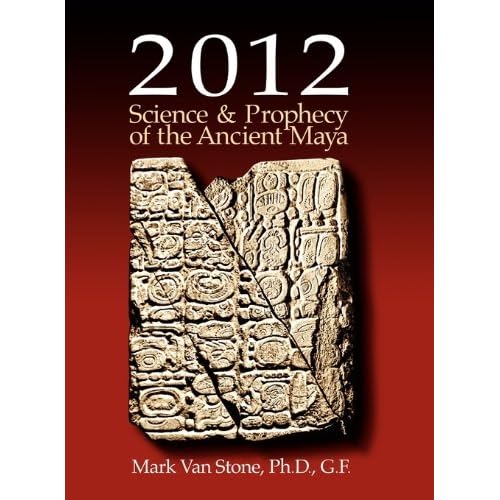 I am host this weekend to an itinerant archaeologist, who is attending a conference that kicks off the University of Pennsylvania's new exhibit, Lords of Time, about the Maya and the 2012 prophecies. He is the author of a book debunking the notion that the world will end in December this year.
 Meanwhile, I have an apocalypse of my own to avert. I have been battling privet rust mites for a few years. I have about 300 feet of privet hedge. For three years I have sprayed in late May, and sometimes also in June, with horticultural oil. That is apparently too late.
This morning I took leaves from several places on the hedge and resorted to my trusty microscope. Here is one image of the result (magnification, about 50x in this image, more than 100x in the image you'll see if you click). Basically, the entire hedge is infested again, probably because I didn't treat it all, from end to end, in the past, only where the leaf curling and silvering were visible. This leaf and the others I looked at show no symptoms, yet!
I have a couple of jars of oil so I know what I'll be doing this morning, right after I get the archaeologist to his train.
Thursday, May 03, 2012
Down the garden path and right off the cliff
kw: book reviews, nonfiction, satire
In 1962 the country got a good laugh from Vaughn Meader's record album The First Family, which poked fun at President John Kennedy and his family. It was great fun, and introduced a new generation to political satire, which had been rather thin on the ground since the early 1900s.
I was expecting something similar, with perhaps a broader spectrum, from American Freak Show: The Completely Fabricated Stories of our New National Treasures, by Willie Geist. I had not reckoned with the X generation and its propensity to be eXtreme in everything. Start with the notion of a caricature. It may be gentle or biting, subtle or broad, but well done caricature leaves its target recognizable.
This is not so with this book. It takes the notion of satire right to the edge of humanness, and quite a bit beyond. It also goes well beyond the bounds of decency. None of it was funny enough to justify the profane and vulgar content. Saturday Night Live is positively Victorian by contrast. I'm sorry I read it, and that's the last I'm going to say.
Wednesday, May 02, 2012
Everybody loves Outlook
kw: email
I learned long ago that vulnerabilities in MS Outlook make it a prime target of virus writers and worm writers. So I have avoided using it for many years. At my work place, we've used Lotus Notes for more than ten years, and over time I got used to it. At home, I use the ISP's webmail tool, which has served me well enough. I used to use Eudora before I got broadband internet access. I also have a couple of specialty Email accounts on GMail.
Now the company management has decided to become an all-Microsoft shop, meaning we are learning SharePoint and Outlook, which are taking the place of the various parts of Lotus Notes. We are joining about 240 million people, just in the U.S., who primarily use Outlook for their Email. Fortunately, the learning curve for Outlook 2010 isn't too steep, at least not from the perspective of us peons.
From the perspective of corporate IT, it has been a long process. A major matter was migrating everyone's Lotus Notes stuff to Outlook. It took months to get a software tool working as well as it needed to. My migration occurred this morning. They ran the software against my LN files overnight (mine and a number of other folks. They are doing it in phases).
I got my new Outlook account set up this morning, and found almost everything there. Just not my Contacts. The address book synchronization that worked for most folks had not worked in my case. I used the Export software in LN to prepare a VCard file. But Outlook only receives the first card in a VCard file. I found I could right click on a LN contact record and have it Emailed as a VCard attachment. I only needed to move about a dozen contacts over, so sending myself a dozen Emails was the quickest way to do it. A colleague wrote a little Perl script that makes a multi-card file into any number of one-card files, so other folks who have my problem will use that.
Interesting to say, I am now up and running on Outlook, a bit quicker than I expected. Its similarity to other Office 2010 applications helped. I am still leery of its vulnerability to virus attack, but I guess the multilayer firewall at the company will help. Now to read the eight page tips sheet they sent us about using Outlook…
Tuesday, May 01, 2012
Did it really ever start?
kw: book reviews, nonfiction, cosmology, time perspective, material engagement
Someone (several someones) said that "people generally get the leaders they deserve." That goes for universes. The Universe in which we live reflects the culture that gave rise to the concepts that are used to describe it. When did Cro-Magnon people, or perhaps Australopithecenes before them, first spin myths about the lights in the sky at night, and moon and sun? Things had come a long way by the time of Albert Einstein's gedankenexperimenten with railway carriages and elevators. Now, with our supercollider experiments and pocket telephones that idle along with cycle times measured in picoseconds, a few professional worriers are worrying out what might have happened during the first billionth of a billionth of a yoctosecond (that's 10-42 or 10-43 seconds, folks).
The time scales pertinent to a farmer are days and quarter-days, months and seasons in the yearly round. The Sun is the only clock needed. For the first few centuries after the invention of mechanical clocks, they had an hour hand only. The word "minute", pronounced my-nyoot', just meant really small; a "second" was the guy who backed you up in a duel. At some time these words, with fresh new pronunciations, became the go-to words for "1/60 hour" and "1/3600 hour". Now look what we have:

Each of the successive words in this graphic means 1/1000 of the one to its left. This Google Ngram shows the percent of books using the words indicated. Clearly, a century ago people got along just fine without dividing time up smaller than a second. Then Hertz and Marconi came along, and radio frequencies necessitated new words to describe their cycle times. The millisecond and microsecond came into their own with the invention of ENIAC. Note the sudden surge in "nanosecond" beginning about 1955. Early particle accelerators began making mesons and other "resonances" that only stayed around for a billionth of a second or less, and about every decade since there has been the need to write a lot about the next level of "tiny time". We're just getting going with attoseconds. In one attosecond (1 as = 10-18s), light moves about three Ångstrom units, or 0.3 nm, the length of a water molecule. Attosecond computer cycles are unlikely to be achieved. The present record for overclocking a CPU chip is 8.429 GHz, which is a cycle time of 118.6 ps, or 118,600,000 as. The computer I am using right now hums along at a comfortable 3.05 GHz, a cycle time of 328 ps.
It does remind me of something said by Data in a Star Trek: Next Generation episode. Asked if he had considered betraying Captain Picard, he said, "Yes, for 1.78 seconds." Picard smiles with relief, until Data says, "Of course, to an android, that is an eternity." Well, Data may think on a picosecond or even femtosecond time scale, but our human brains still run on cycle times of 50 milliseconds or longer.
So there is one thing the Greeks got right when they mythologized about their cosmology: The oldest and most powerful god was named Chronos, or "time". How we think about time has changed over the past tenth-of-a-million years. Time itself? Not so much. But that may be about to change. In his new book About Time: Cosmology and Culture in the Twilight of the Big Bang, Adam Frank takes us on a journey through human culture, right to the brink of the theories that just may do away with time. What will replace it? Zeus replaced Chronos; will power replace time? Let's remember that Zeus was famously anarchistic (and promiscuous).
A central thesis of the book is that time and space are as much constructs of our consciousness as they are its source. A key phrase is "material engagement," the continual back-and-forth of our growing cultural concepts as mediated by our involvement in the material world. Einstein thought about events that seemed simultaneous as seen by a ticket-seller in a train station, and how they would be perceived by the conductor aboard the train. Particularly if the train were moving at a speed approaching 300,000 km/s. He compared it to the "perception" of a light ray itself, racing between railway station and the carriage, to convey the news about an event the station master wished to time. This kind of thinking led to the special theory of relativity, which still requires a strong dose of "de-befuddling" by physics teachers, so students can think properly about phenomena that occur rapidly at "relativisitic" speeds.
But what is material engagement? I got this quote from the man who coined the term, Lambros Malafouris:
Thus, the book culminates in the work of four "rebel" scientists in three areas. First James Barbour would convince us that there is no time, there are just "NOWs"; that causality is an illusion (although I suspect S.J. Gould, were he still with us, would have something to say about "contingency" mediating what is possible). Secondly, Andreas Albrecht, an early proponent of inflation cosmology (which I heartily reject), finds that the choice of one's clock determines the model of the universe that we must adhere to. An example is given (which I confess I found hard to follow), that by choosing what you use to measure time, you can transform the equations describing an electron's motion to equations that pertain to photons. If that is true, it is truly world (or universe-) shaking. In my physics education (before I turned to geophysics), bosons were bosons and fermions were fermions; never would the twain meet, at least not mathematically! Finally, Lee Smolin and Roberto Unger "look across the landscape of modern cosmology with its extra dimensions and other universes, declare them fictions and set off to deliberately forge another path" (p315).
Is it any surprise that such anti-establishment views can arise now, where we are on the verge of technologies that might just abstract us from the world? Is The Matrix to become true after all? And can machine-mediated thinking drive our thought processes into Data-like android territory? If time becomes malleable, it is no surprise that new cosmology theories will arise to match. That is the lesson of material engagement. Cultural shifts change the way we think, often in radical ways ("How you gonna get 'em back on the farm, after they've seen L.A.?"). Our ability to probe cosmology brings about a new cosmology. Then we push that cosmology to its limit. In the process, culture shifts, and new thoughts about cosmology become possible.
A final question is asked: "How much of the cosmos do we have objective access to?" (p 330). It seems, just considering matter, that some 75% of it is invisible, not reacting to photons. So-called "dark matter" is needed in copious amounts to keep galaxies from dissipating or galaxy clusters from evaporating. Maybe one day we'll discover "rubindium" and its sister meta-elements as postulated in Star Trek. But then there's "dark energy", which seems to be driving an accelerated expansion of the visible universe. I have been looking hard, and have yet to see anyone explore the notion that a Type 1a supernova in an extra-low-metallicity system (i.e., a very early one) might have a different intrinsic luminosity than a Type 1a supernova in a system with Z in the solar range. Until that question is fully dealt with, the "evidence" for acceleration is not just shaky, it is practically nonexistent.
A simpler way to ask the question is, "What can we really see?" In practical terms, we can see what we are looking for, and it takes a long time to see what we are not looking for. I appreciate those four rebels very much. They are not just asking the right kinds of questions, they have the intellectual tools to work towards answers to their questions. Not all of them will be right, but I would not bet against them. One or the other is likely to do work that will one day put the Big Bang on the shelf, along with Ptolemy's epicycles.
Someone (several someones) said that "people generally get the leaders they deserve." That goes for universes. The Universe in which we live reflects the culture that gave rise to the concepts that are used to describe it. When did Cro-Magnon people, or perhaps Australopithecenes before them, first spin myths about the lights in the sky at night, and moon and sun? Things had come a long way by the time of Albert Einstein's gedankenexperimenten with railway carriages and elevators. Now, with our supercollider experiments and pocket telephones that idle along with cycle times measured in picoseconds, a few professional worriers are worrying out what might have happened during the first billionth of a billionth of a yoctosecond (that's 10-42 or 10-43 seconds, folks).
The time scales pertinent to a farmer are days and quarter-days, months and seasons in the yearly round. The Sun is the only clock needed. For the first few centuries after the invention of mechanical clocks, they had an hour hand only. The word "minute", pronounced my-nyoot', just meant really small; a "second" was the guy who backed you up in a duel. At some time these words, with fresh new pronunciations, became the go-to words for "1/60 hour" and "1/3600 hour". Now look what we have:

Each of the successive words in this graphic means 1/1000 of the one to its left. This Google Ngram shows the percent of books using the words indicated. Clearly, a century ago people got along just fine without dividing time up smaller than a second. Then Hertz and Marconi came along, and radio frequencies necessitated new words to describe their cycle times. The millisecond and microsecond came into their own with the invention of ENIAC. Note the sudden surge in "nanosecond" beginning about 1955. Early particle accelerators began making mesons and other "resonances" that only stayed around for a billionth of a second or less, and about every decade since there has been the need to write a lot about the next level of "tiny time". We're just getting going with attoseconds. In one attosecond (1 as = 10-18s), light moves about three Ångstrom units, or 0.3 nm, the length of a water molecule. Attosecond computer cycles are unlikely to be achieved. The present record for overclocking a CPU chip is 8.429 GHz, which is a cycle time of 118.6 ps, or 118,600,000 as. The computer I am using right now hums along at a comfortable 3.05 GHz, a cycle time of 328 ps.
It does remind me of something said by Data in a Star Trek: Next Generation episode. Asked if he had considered betraying Captain Picard, he said, "Yes, for 1.78 seconds." Picard smiles with relief, until Data says, "Of course, to an android, that is an eternity." Well, Data may think on a picosecond or even femtosecond time scale, but our human brains still run on cycle times of 50 milliseconds or longer.
So there is one thing the Greeks got right when they mythologized about their cosmology: The oldest and most powerful god was named Chronos, or "time". How we think about time has changed over the past tenth-of-a-million years. Time itself? Not so much. But that may be about to change. In his new book About Time: Cosmology and Culture in the Twilight of the Big Bang, Adam Frank takes us on a journey through human culture, right to the brink of the theories that just may do away with time. What will replace it? Zeus replaced Chronos; will power replace time? Let's remember that Zeus was famously anarchistic (and promiscuous).
A central thesis of the book is that time and space are as much constructs of our consciousness as they are its source. A key phrase is "material engagement," the continual back-and-forth of our growing cultural concepts as mediated by our involvement in the material world. Einstein thought about events that seemed simultaneous as seen by a ticket-seller in a train station, and how they would be perceived by the conductor aboard the train. Particularly if the train were moving at a speed approaching 300,000 km/s. He compared it to the "perception" of a light ray itself, racing between railway station and the carriage, to convey the news about an event the station master wished to time. This kind of thinking led to the special theory of relativity, which still requires a strong dose of "de-befuddling" by physics teachers, so students can think properly about phenomena that occur rapidly at "relativisitic" speeds.
But what is material engagement? I got this quote from the man who coined the term, Lambros Malafouris:
"In the dynamic tension that characterises the processes of material engagement, sometimes it is the thing that becomes the extension of the person. At other times, however, it is the person that becomes the extension of the material agent. … Agency as an emergent property cannot be reduced to any of the human - nonhuman components of action."(p 34 in Material Agency: Towards a Non-Anthropocentric Approach; Carl Knappett and Lambros Malafouris, eds. 2008). That is about as clear as Dr. Malafouris gets; his prose is mostly impenetrable. The key phrase here is "dynamic tension". It simply means that the material things in the world in which we live mediate what we can think about. Culture and cosmology define one another. A strong message of Dr. Frank's book is that now we have a language to describe cosmology that is more complete than anything previous. Pushing it to its limits (worrying about that first quintillionth of a yoctosecond), we have come to the limits of our ability to think about time.
Thus, the book culminates in the work of four "rebel" scientists in three areas. First James Barbour would convince us that there is no time, there are just "NOWs"; that causality is an illusion (although I suspect S.J. Gould, were he still with us, would have something to say about "contingency" mediating what is possible). Secondly, Andreas Albrecht, an early proponent of inflation cosmology (which I heartily reject), finds that the choice of one's clock determines the model of the universe that we must adhere to. An example is given (which I confess I found hard to follow), that by choosing what you use to measure time, you can transform the equations describing an electron's motion to equations that pertain to photons. If that is true, it is truly world (or universe-) shaking. In my physics education (before I turned to geophysics), bosons were bosons and fermions were fermions; never would the twain meet, at least not mathematically! Finally, Lee Smolin and Roberto Unger "look across the landscape of modern cosmology with its extra dimensions and other universes, declare them fictions and set off to deliberately forge another path" (p315).
Is it any surprise that such anti-establishment views can arise now, where we are on the verge of technologies that might just abstract us from the world? Is The Matrix to become true after all? And can machine-mediated thinking drive our thought processes into Data-like android territory? If time becomes malleable, it is no surprise that new cosmology theories will arise to match. That is the lesson of material engagement. Cultural shifts change the way we think, often in radical ways ("How you gonna get 'em back on the farm, after they've seen L.A.?"). Our ability to probe cosmology brings about a new cosmology. Then we push that cosmology to its limit. In the process, culture shifts, and new thoughts about cosmology become possible.
A final question is asked: "How much of the cosmos do we have objective access to?" (p 330). It seems, just considering matter, that some 75% of it is invisible, not reacting to photons. So-called "dark matter" is needed in copious amounts to keep galaxies from dissipating or galaxy clusters from evaporating. Maybe one day we'll discover "rubindium" and its sister meta-elements as postulated in Star Trek. But then there's "dark energy", which seems to be driving an accelerated expansion of the visible universe. I have been looking hard, and have yet to see anyone explore the notion that a Type 1a supernova in an extra-low-metallicity system (i.e., a very early one) might have a different intrinsic luminosity than a Type 1a supernova in a system with Z in the solar range. Until that question is fully dealt with, the "evidence" for acceleration is not just shaky, it is practically nonexistent.
A simpler way to ask the question is, "What can we really see?" In practical terms, we can see what we are looking for, and it takes a long time to see what we are not looking for. I appreciate those four rebels very much. They are not just asking the right kinds of questions, they have the intellectual tools to work towards answers to their questions. Not all of them will be right, but I would not bet against them. One or the other is likely to do work that will one day put the Big Bang on the shelf, along with Ptolemy's epicycles.
Monday, April 30, 2012
Another step towards Big Brother
kw: politics, policy, internet, privacy, legislation
An act called CISPA (Cyber Intelligence Sharing and Protection Act) passed the U.S. House of Representatives yesterday, and now it goes to the Senate. Proponents say, "Oh, no, it won't impact the privacy of citizens," but we know that's a sham. It is interesting to them precisely because they know it erases most of our privacy protections. See this C|Net article for a good analysis.
I find that Republican congressmen voted in favor 206 to 28. I am ashamed of them. I am a registered Republican, but this sure isn't the party of Abraham Lincoln or Theodore Roosevelt any longer. I may have to become a Libertarian.
I remember the first Terabyte database, which cost about a million dollars to set up in the early 1980s. It was commissioned by the Mormons for genealogical record-keeping. My colleagues and I were joking that if a disk drive with "infinite" capacity were invented—we called it the God file—the government would order two of them. I recall saying, "Sears and GM would be next in line". Today anyone can buy a multi-terabyte disk for about $100. The Google Earth image base is a multi-petabyte (thousands of terabytes) product, and Google is only one of a number of both corporate and government entities to have file bases approaching an exabyte (a million terabytes) in size. The NSA is building a multi-exabyte data store. So just where are they going to get data to fill it? You guessed it: the Internet, and CISPA is an integral part of the process. It gives them the right to "ask" for data dumps without breaking any laws, because CISPA removes or supersedes most current legal protections. The President has stated he will veto it if the Senate passes it. That's one thing he could do that I would like a great deal!
Sunday, April 29, 2012
Mount Cuba 2012
kw: photographs, wildflowers, wildlife
 We spent a pleasant hour at the Mount Cuba Center in Hockessin, Delaware this afternoon. The Center is famous for preserving and studying the native vegetation of this region. Less well known than some of the DuPont family estates such as Longwood Gardens, it is the only one I know that has solely native plants on display (except in the Round Garden where there are tulips and delphiniums).
Today was special: because of the mild winter, the Trilliums are actually past their prime, the dogwoods as well, but the wild azaleas are just getting into full bloom (see below. I am still getting used to the new blogging software).
It was also special because they had two people from a wild bird rehabilitation center (I didn't catch its name) bring in some raptors (hawks and a falcon), and this vulture, to show us. Each of the birds shown is injured in some way and could not live in the wild. The vulture is 20 years old and was raised as a pet, so it is much too trusting around people.
 A pleasant day, with perfect weather for a long walk in the woods and gardens.

Today was special: because of the mild winter, the Trilliums are actually past their prime, the dogwoods as well, but the wild azaleas are just getting into full bloom (see below. I am still getting used to the new blogging software).
 |
| Lavender Trilliums with Bluets |
It was also special because they had two people from a wild bird rehabilitation center (I didn't catch its name) bring in some raptors (hawks and a falcon), and this vulture, to show us. Each of the birds shown is injured in some way and could not live in the wild. The vulture is 20 years old and was raised as a pet, so it is much too trusting around people.
 |
| Closeup of wild Azalea |

Friday, April 27, 2012
A head covered with foam
kw: observations, products, analysis
I am sure you've seen the ads for shampoo, where someone squeezes out an ounce or two of shampoo and lathers up. You see lather flying everywhere. I use one of those advertised shampoos, and I use a drop about the size of a nickel. I began to wonder, just how much does it take to clean my hair?
For most of us, we're really trying to remove oils that our scalps produce, and the amount is really quite small, even for someone with "oily hair". The surfactants in shampoo bind to an amount of oil roughly equal to their own volume. I haven't found any record of some number of milligrams or micrograms of oil that is "normal", so we'll have to make a reasonable estimate.
I have found by observation that if I get my hair very clean, it is pretty flyaway (even if it is no more than two inches long). Within a few hours, it gets more manageable when I brush or comb it, from the first coating of oil. So I estimate that enough oil is produced in about two hours to form a monolayer on all the hair, and production probably continues at this rate all day. By day's end, the hair is not noticeably oily, because a dozen monolayers is still not much oil. Let's calculate how much.
When I had a full head of hair, I kept it about as long as I do now, some 5 cm (2 inches). My hair was brown (getting gray these days), so the number of hair strands was about 50,000. That comes to 250,000 cm or 2,500 m of hair (8,200 ft). Brown hair averages about 60 µm in diameter, so its circumference is about 190 µm, or 0.00019 m. Multiply by 2,500 to get 0.475 m². These are rough calculations, so we'll round it to half a square meter. Just by the way, only about half my scalp has hair now, but the bald portion gets oily, so oil production hasn't slackened off.
To get the volume of one monolayer, now we just need the thickness. Skin oils are hydrocarbon based, so they'll have a sausage shape, with a diameter in the range of half a nanometer, or about 5Å (5 angstroms). 0.5m²×0.5nm = 2.5E-10 cubic meters, or 0.00025 cc, or 0.25 cubic mm. Twelve such volumes amount to 3 cubic mm.
So, the amount of oil you need to remove, if you wish to remove it all, is about 3 cubic mm. That is a dot the size of a pin head. Can we really get away with using a similar amount of shampoo? Would it really work? I have yet to make the experiment. My nickel-sized dollop of shampoo is about half a cc, or 500 cubic mm. I'll try smaller and smaller amounts to see how much does an effective job. I suspect there is a lot more at work here than just oil removal.
Subscribe to:
Posts (Atom)

 Posts

